Key takeaways
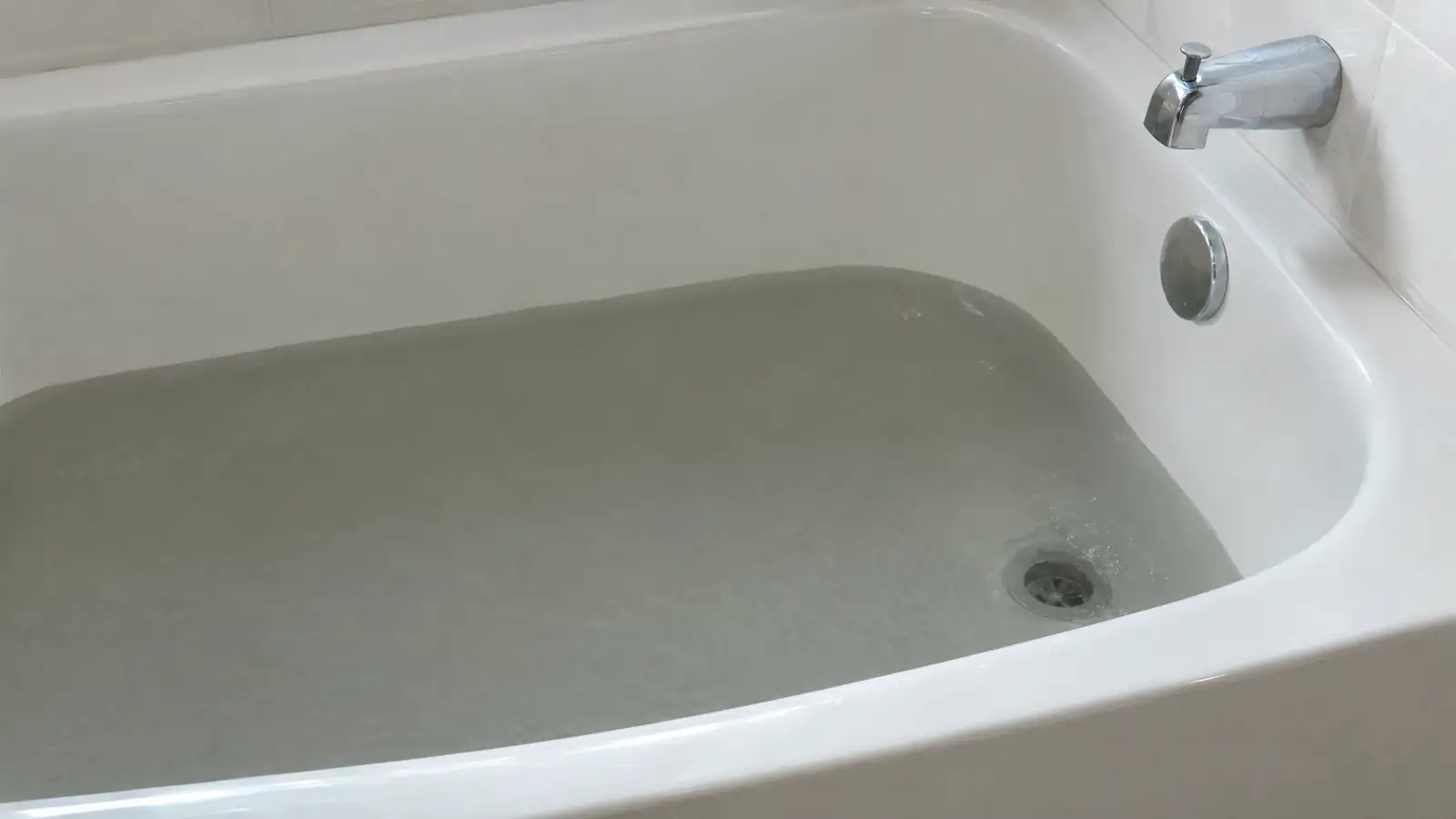
- Stop using water immediately
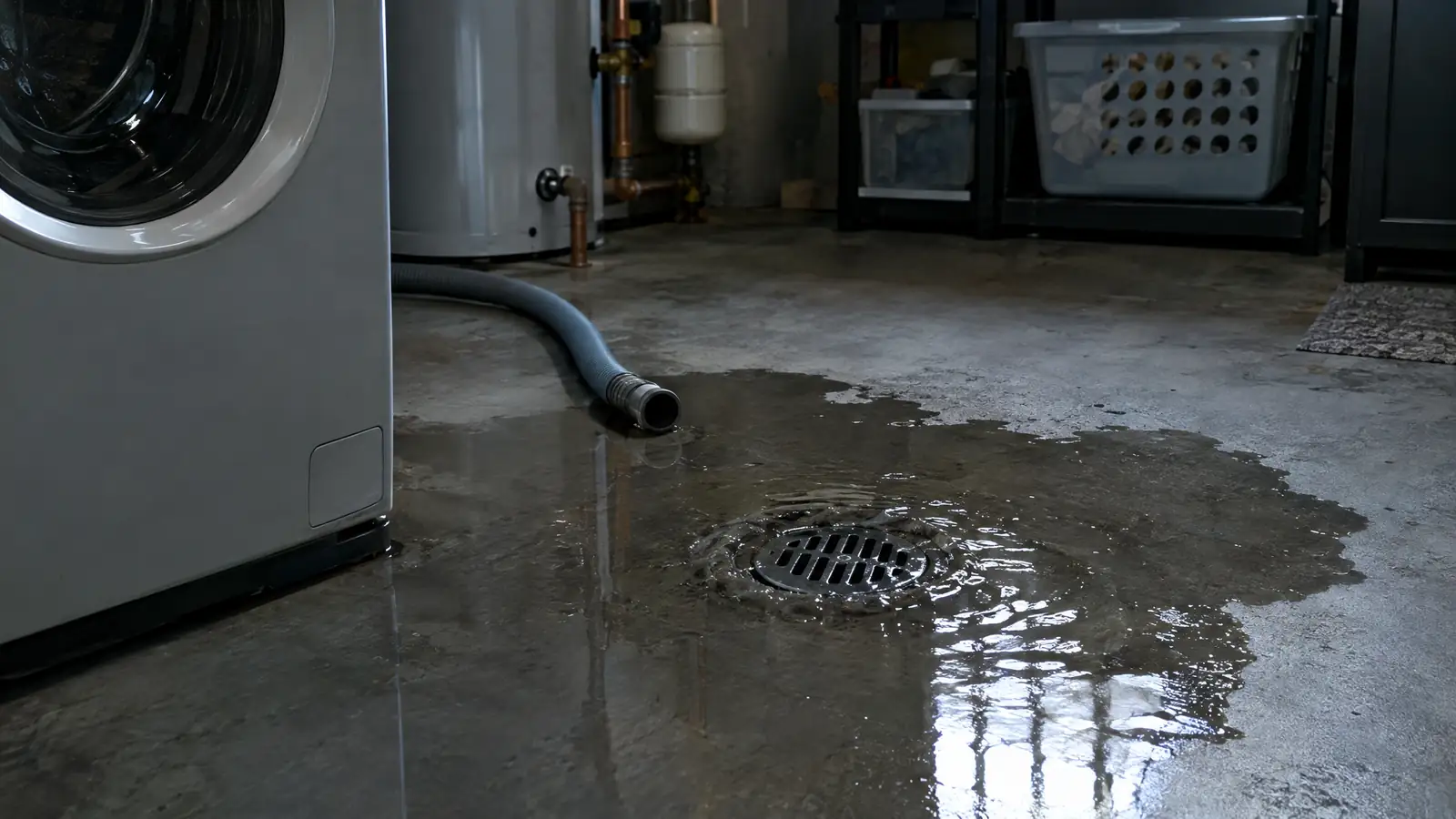
- Keep people and pets away from the sewage
- Do not use chemical cleaners
- Call a professional and, if needed, your utility
In the first minutes
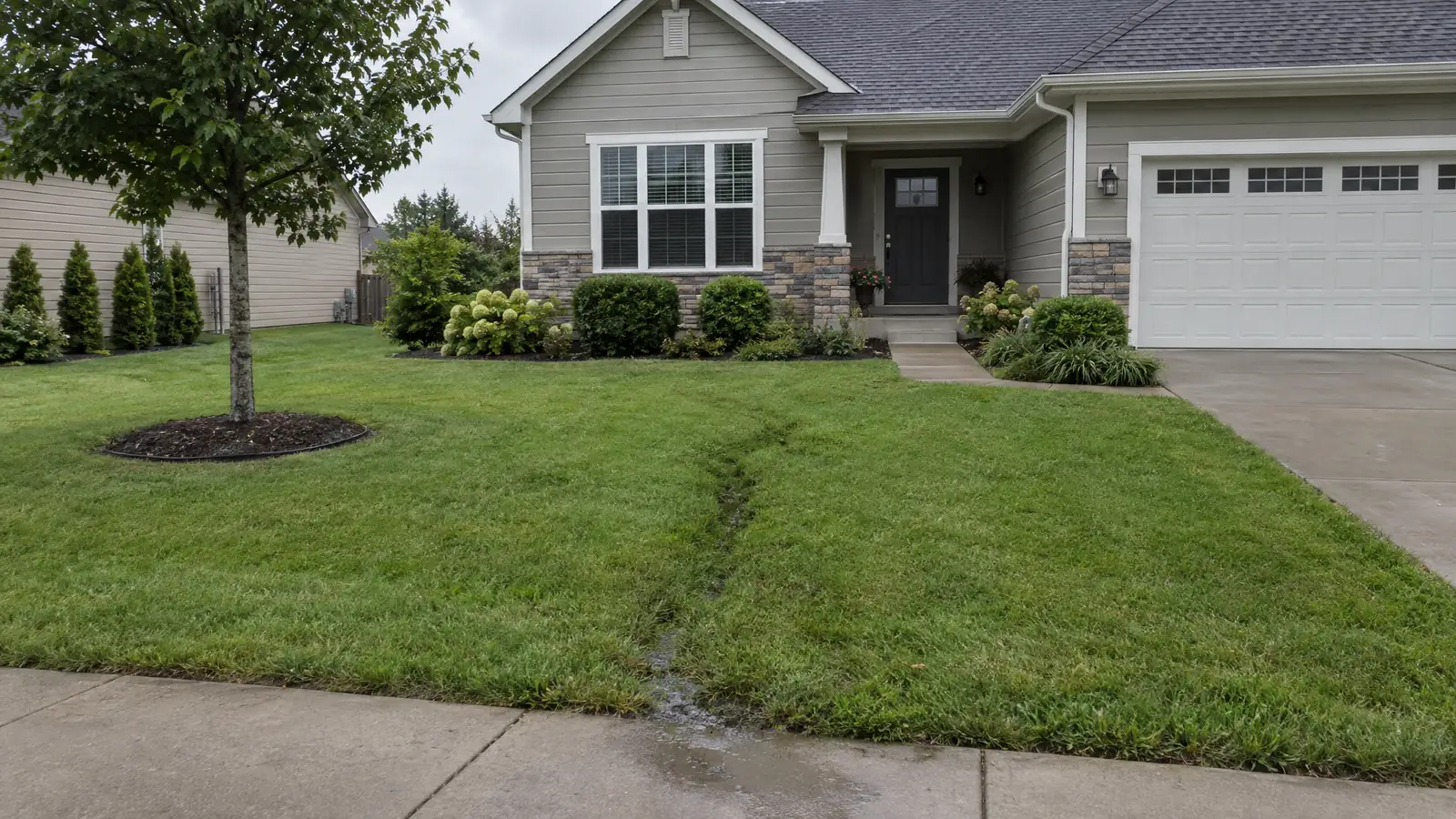
Stop running water: no toilets, showers, dishwasher or washing machine. Keep children and pets away. Avoid contact with the water and wear gloves and boots if you must enter the area.
If there is standing water near electrical outlets or appliances, do not touch them and consider shutting off power at the breaker if it is safe to reach.
What not to do
Do not pour chemical drain cleaner into a backed-up system: it can be dangerous and damage pipes. Do not use a snake blindly if you do not know the cause. Do not wait for it to go away.
Do not run a wet vacuum on sewage unless it is rated for it.
Get the cause found
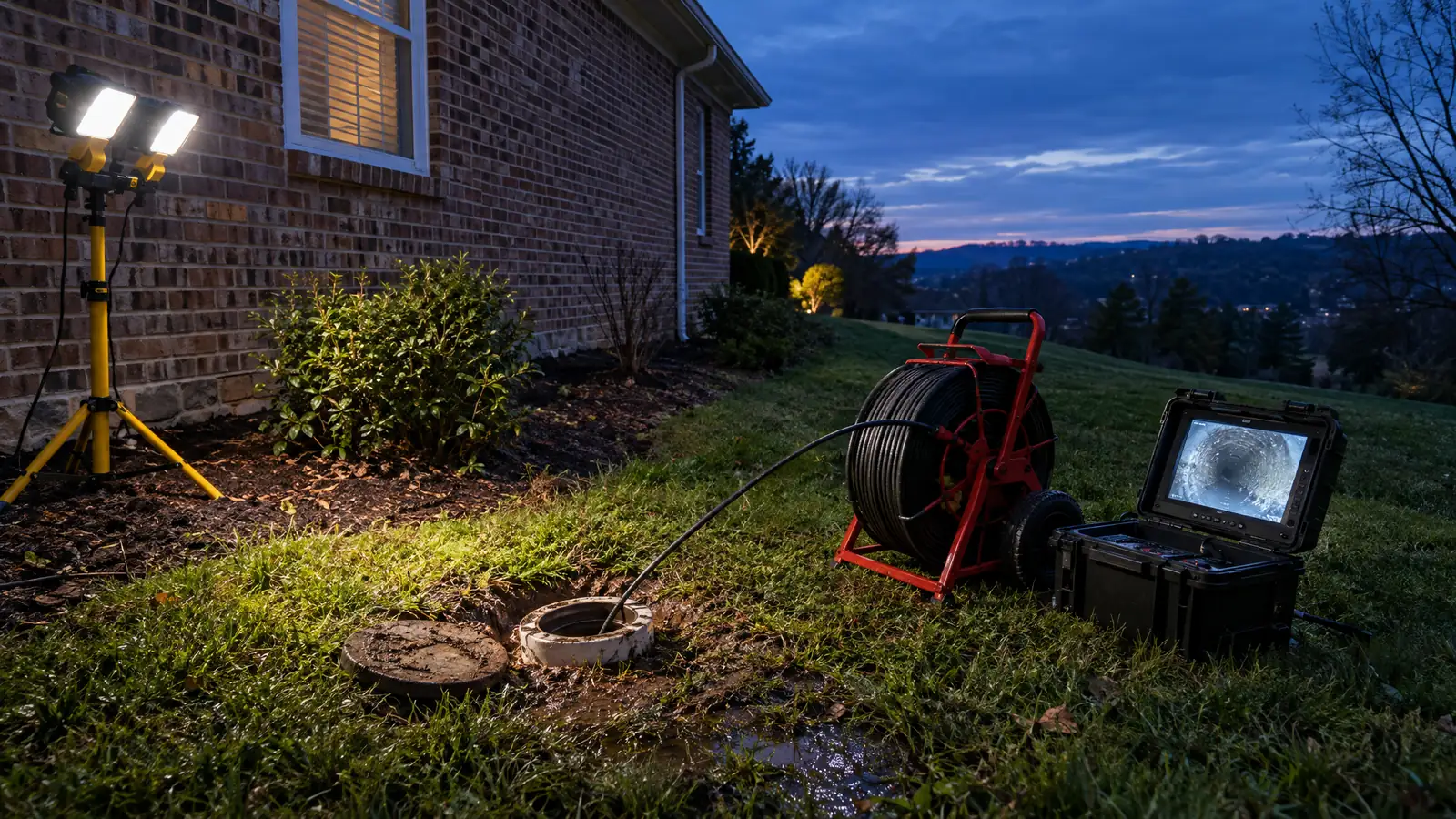
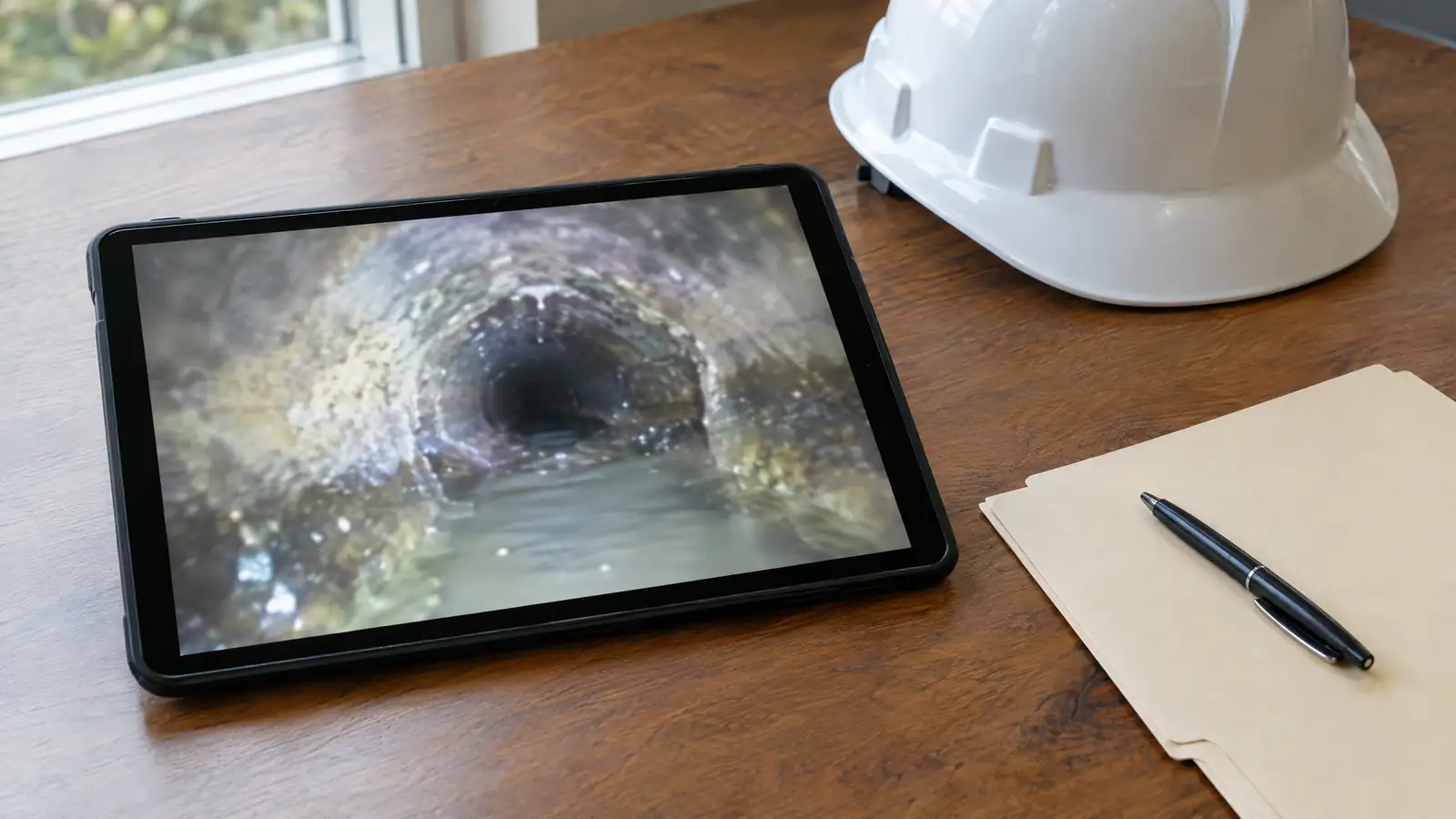
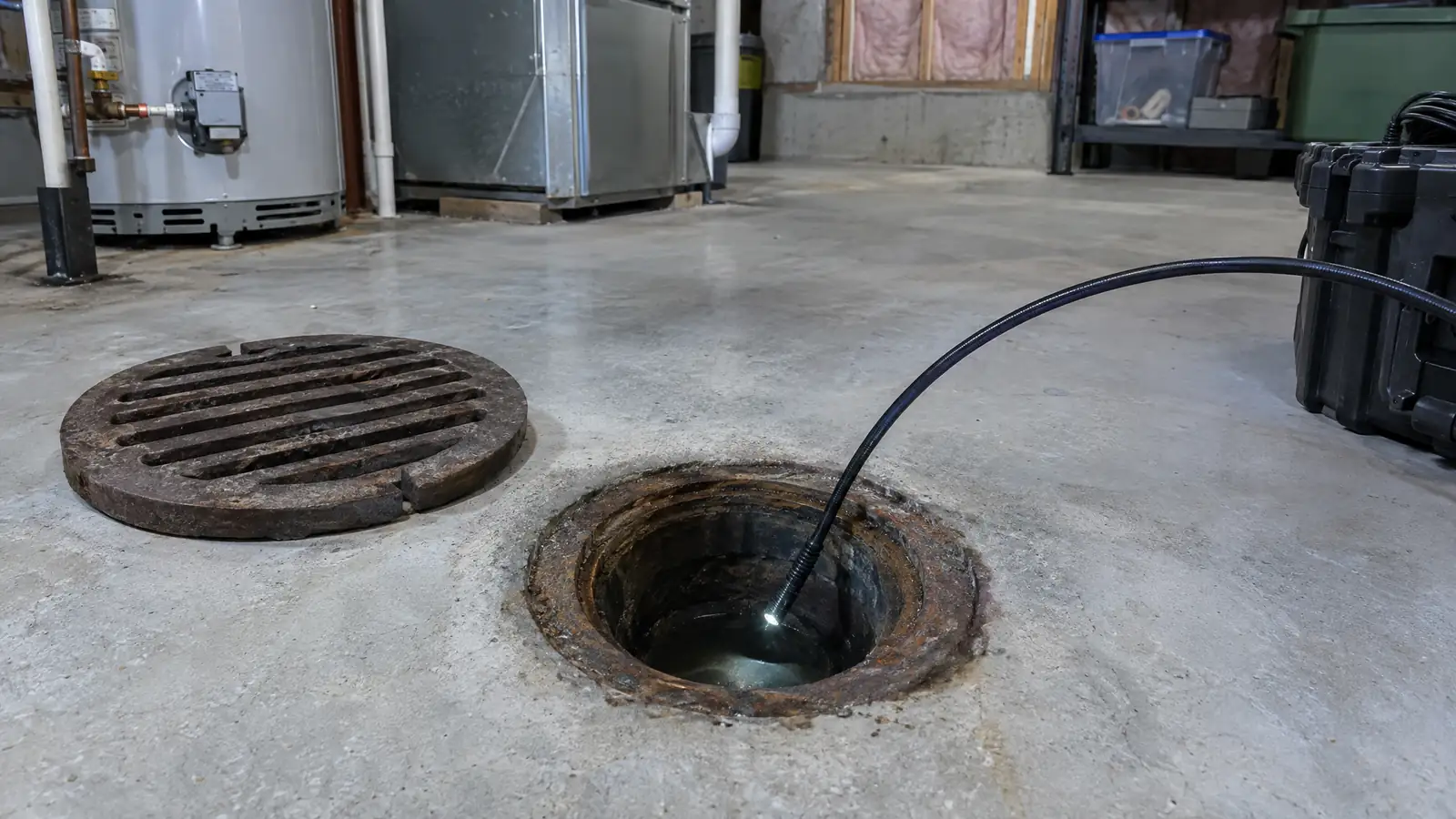
Call a camera inspection service. We find whether the blockage is in your lateral, at the connection or in the public main, and show you footage. That tells you who is responsible and what fix is needed.
If the camera shows the problem is in the street, give the utility the video.
Cleanup and records
Photograph the damage for insurance. Contact your insurer early. A professional cleanup service handles contaminated materials safely.
Keep the inspection video as part of your claim documents.
Quick answers
Is the city responsible?
It depends where the blockage is. The private lateral is usually the owner’s and the public main is the utility’s. Footage helps show where.
Will insurance cover it?
Coverage varies widely by policy. Ask your insurer and ask whether sewer backup coverage is included.
Want a professional look at your own pipe?
Schedule a camera inspection with the form below, or call (615) 952-0844.