Key takeaways
- Made of wood pulp and pitch, 1940s to 1970s
- It softens and flattens into an oval
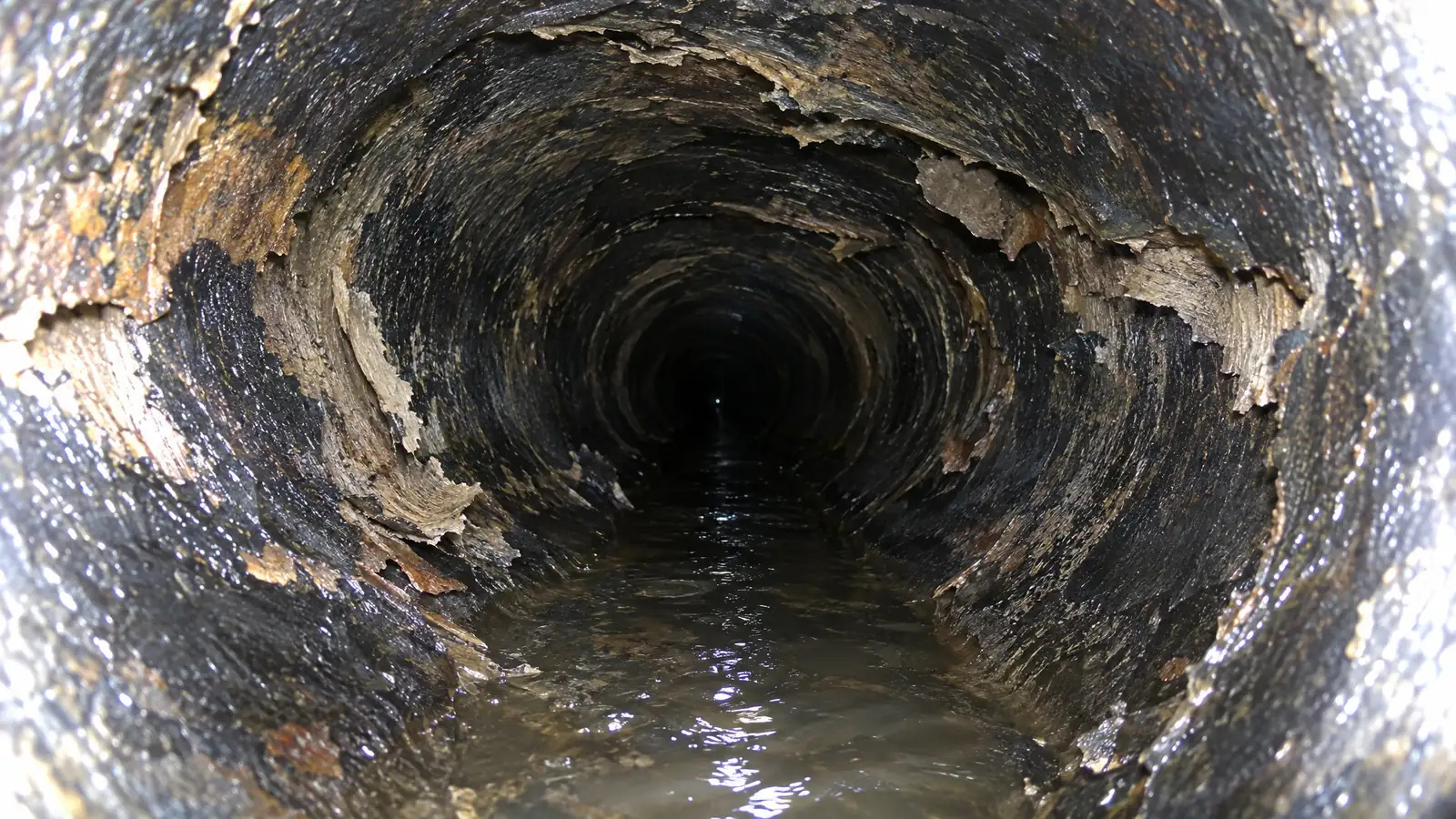
- Walls delaminate into layers
- Typically fails sooner than clay, cast iron or plastic
What it is
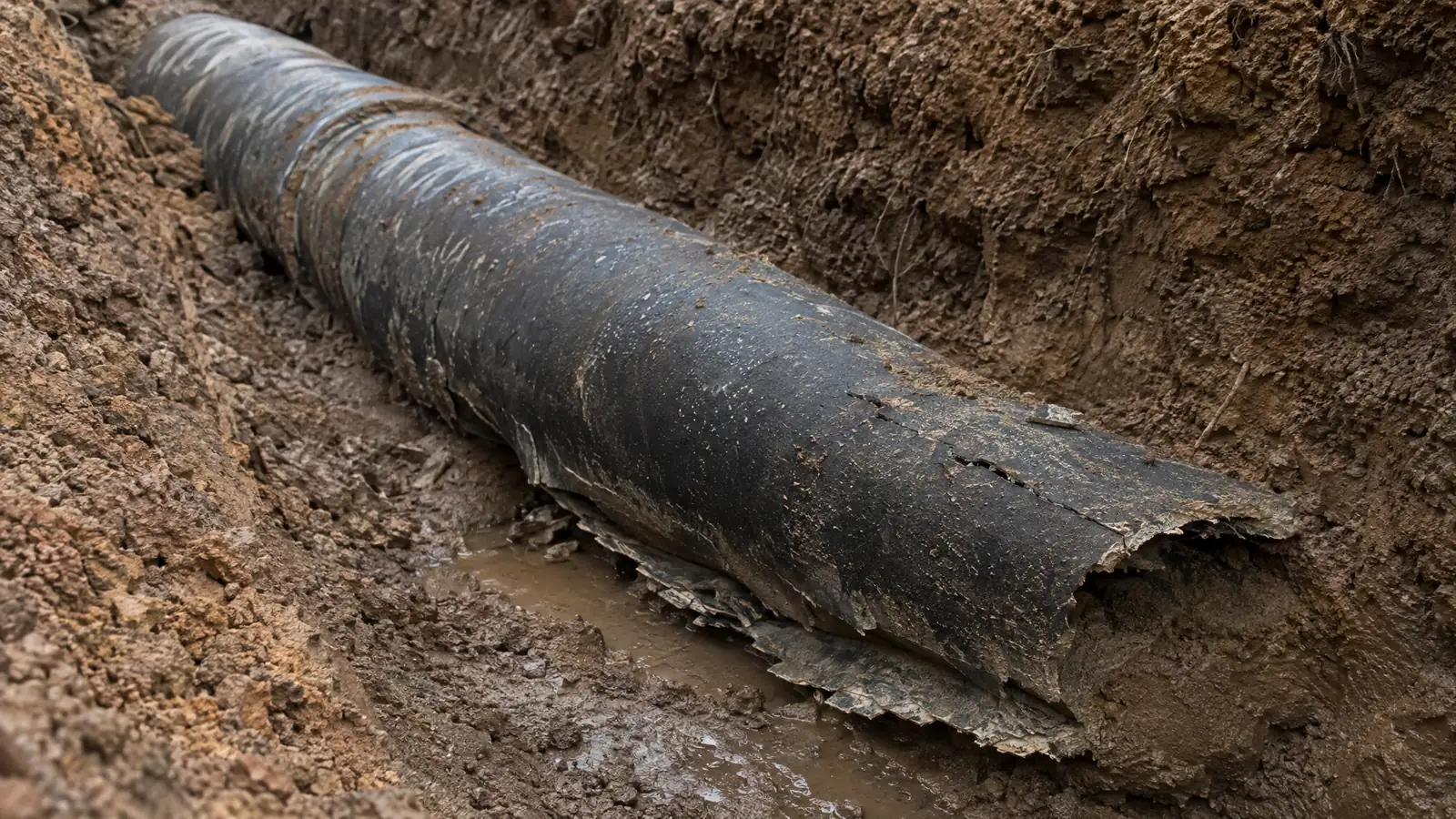
Orangeburg is a lightweight pipe made by impregnating wood fiber with coal-tar pitch. It was cheap and easy to lay, and used widely in house sewers after the war.
It is black and laminated, and a cut end shows layers like plywood.
How it fails
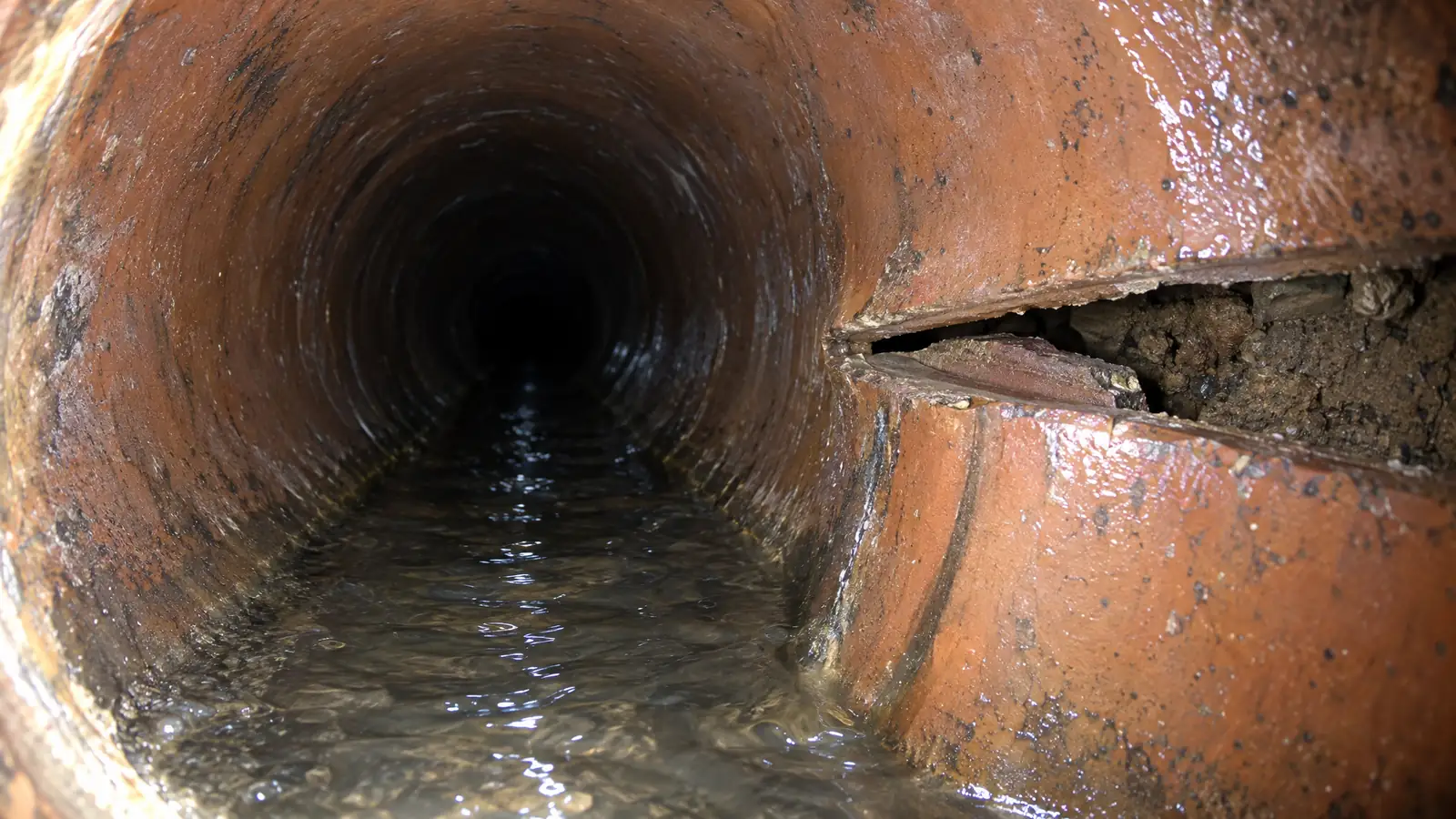
Over time the pipe softens under heat and moisture, loses its round shape and deforms into an egg or oval. The inner layers peel and flake. Roots penetrate easily, and the pipe can collapse under soil load.
Failure often arrives in the form of repeat clogs and then a sudden collapse.
How to tell if you have it
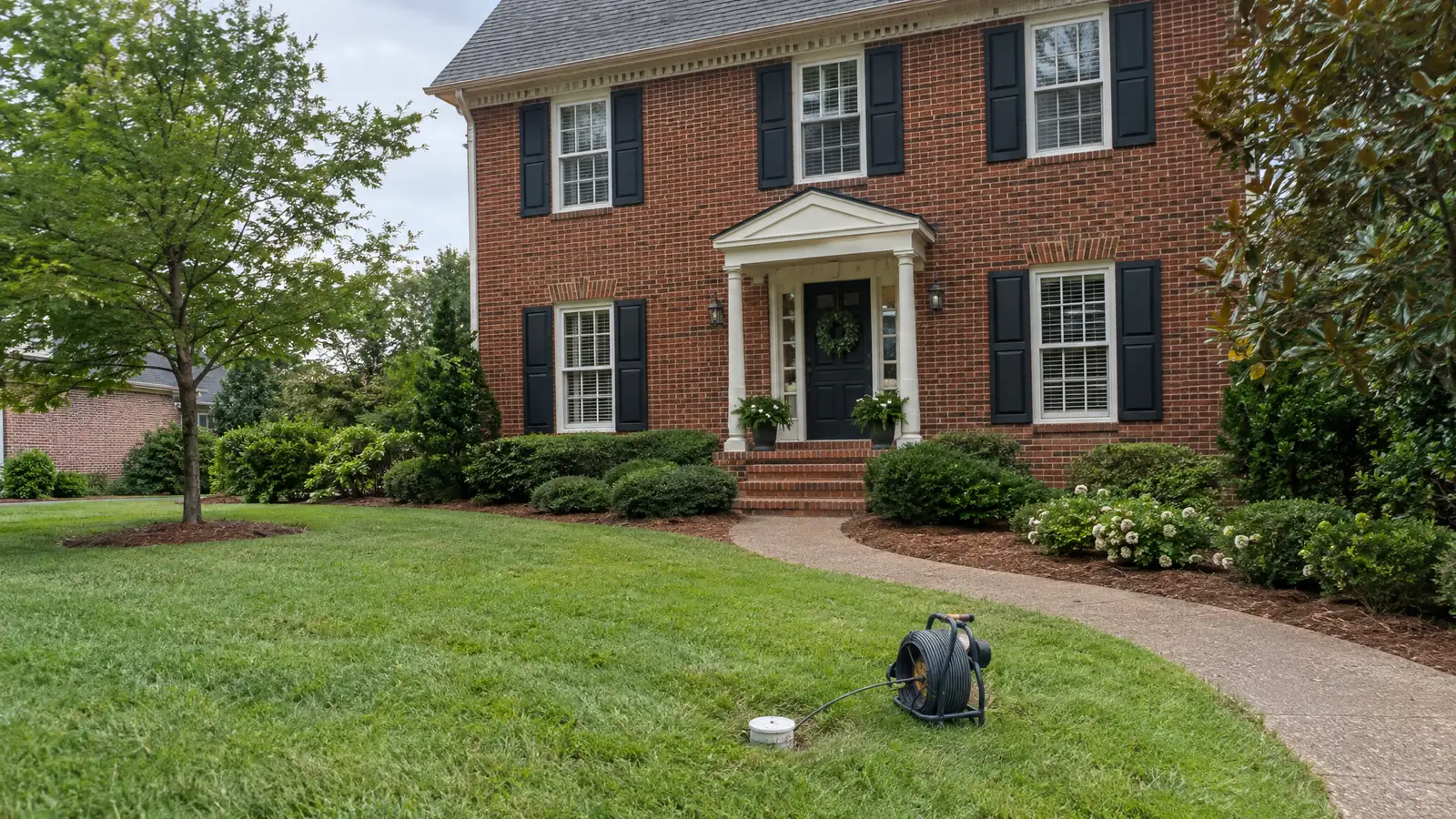
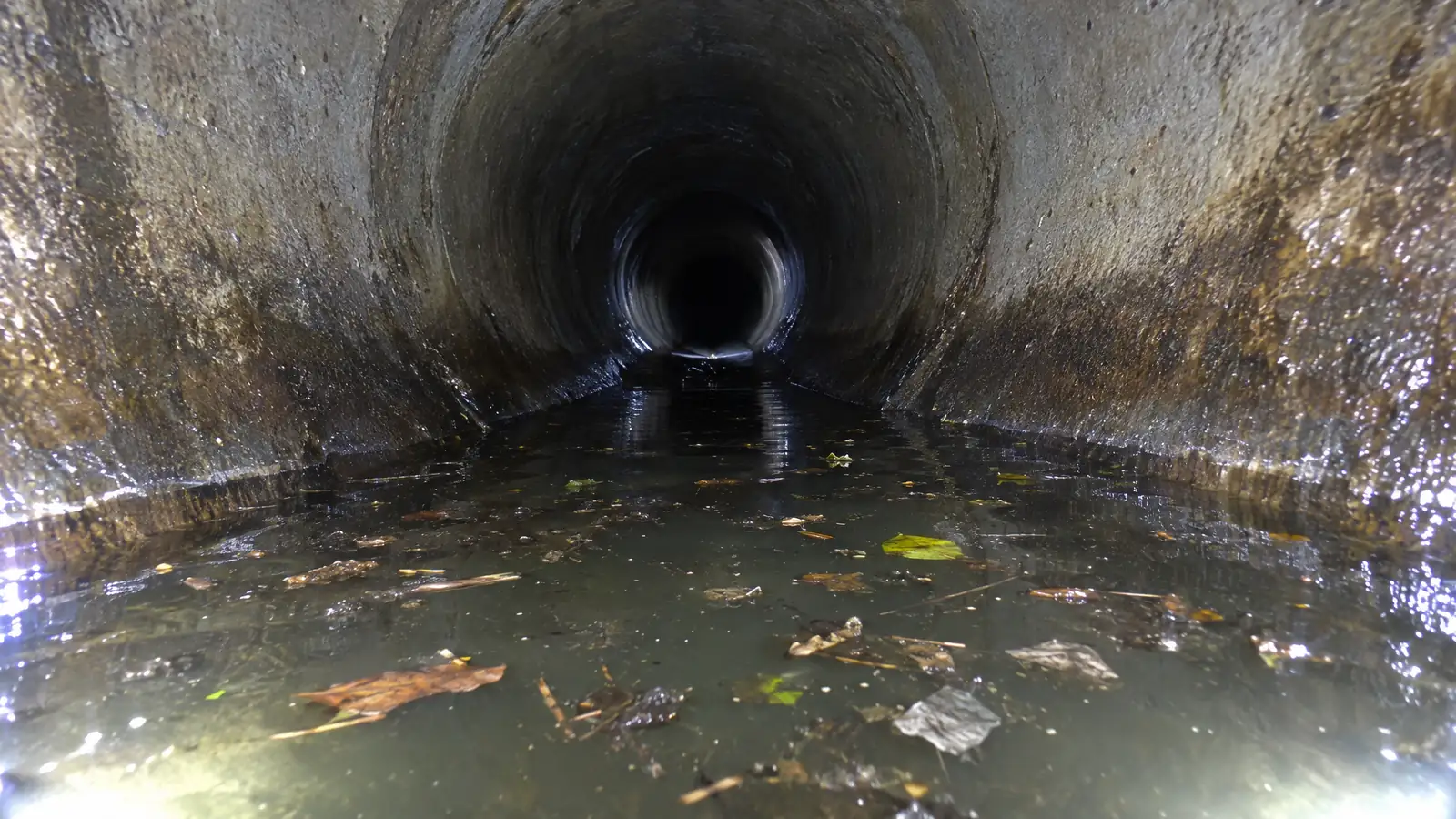
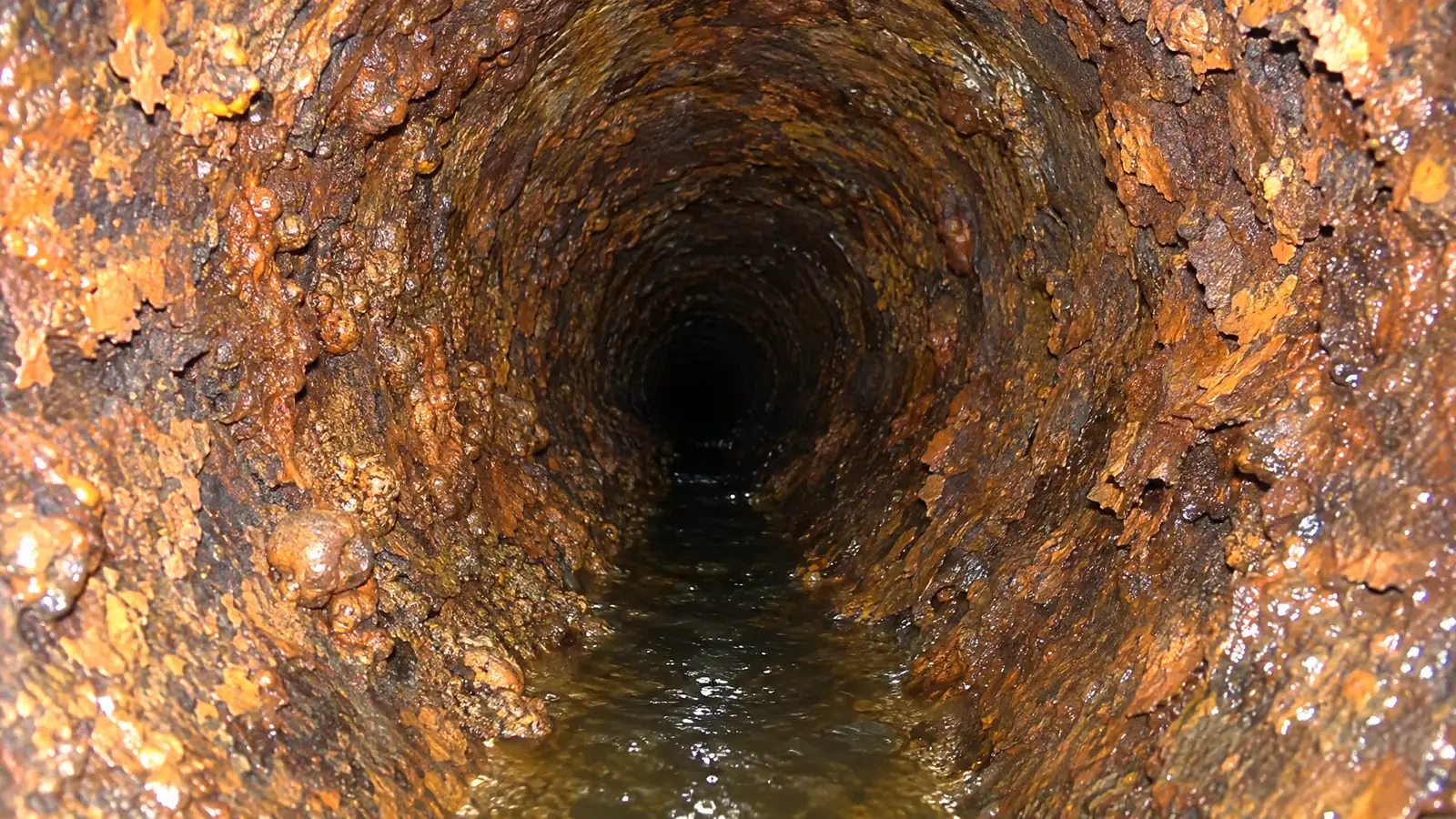
The house’s age is a clue: built between about 1945 and 1975. At a cleanout the pipe may look black and fibrous rather than white plastic, gray iron or orange clay. A camera confirms by the laminated, flaking look.
If in doubt, scope.
What to do
If the pipe is still round, trenchless options such as lining may be possible. If it is badly deformed or collapsed, replacement is the usual route.
If you are buying a house of that era, a camera is especially important.
Quick answers
Is it illegal to have Orangeburg?
It is not banned for existing installations, but it is no longer used for new work because of its short life.
Can I just keep cleaning it?
Cleaning can stress soft pipe. A camera helps decide whether it is safe to clean.
Want a professional look at your own pipe?
Schedule a camera inspection with the form below, or call (615) 952-0844.