Key takeaways
- Cast iron corrodes from the inside
- Rust scale narrows the pipe and traps waste
- Joints and the bottom of the pipe fail first
- Cleaning, lining or replacing depends on the remaining wall
How it forms
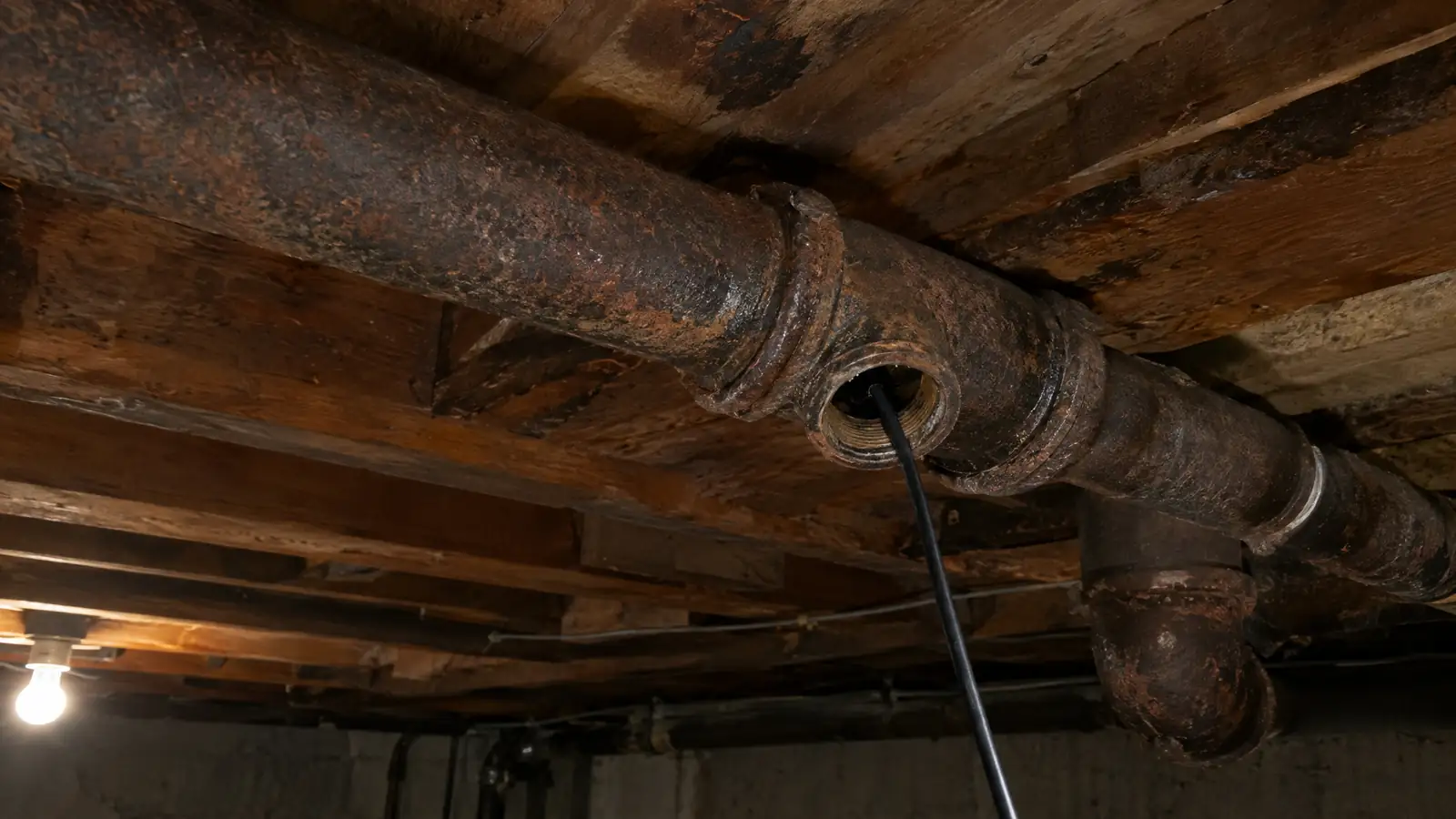
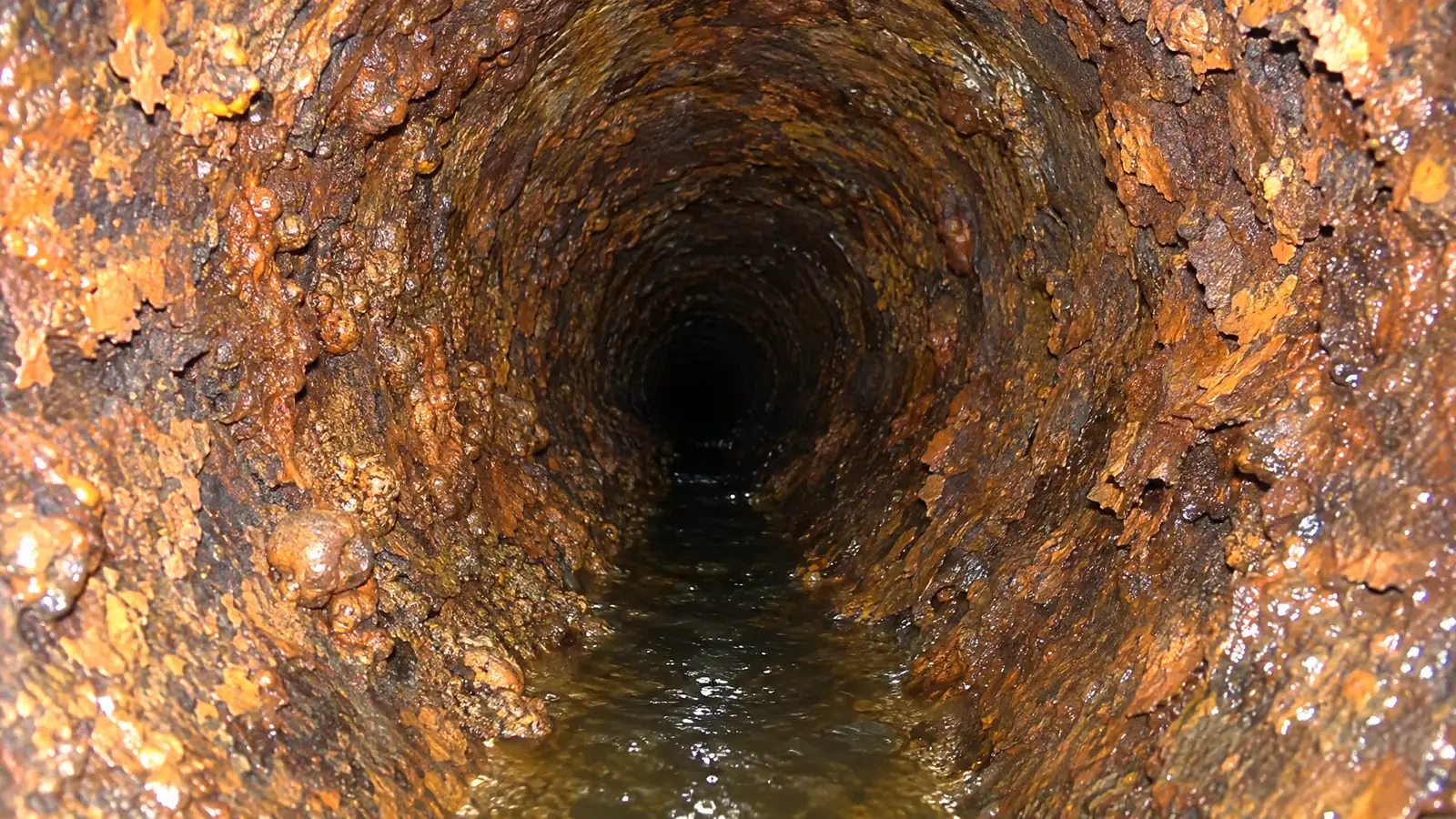
Waste and moisture attack the pipe wall from the inside. Rust builds up in rough lumps called tubercles, leaving a bumpy surface that catches paper and grease.
The bottom of the pipe, where flow is concentrated, usually corrodes the most.
What the camera shows
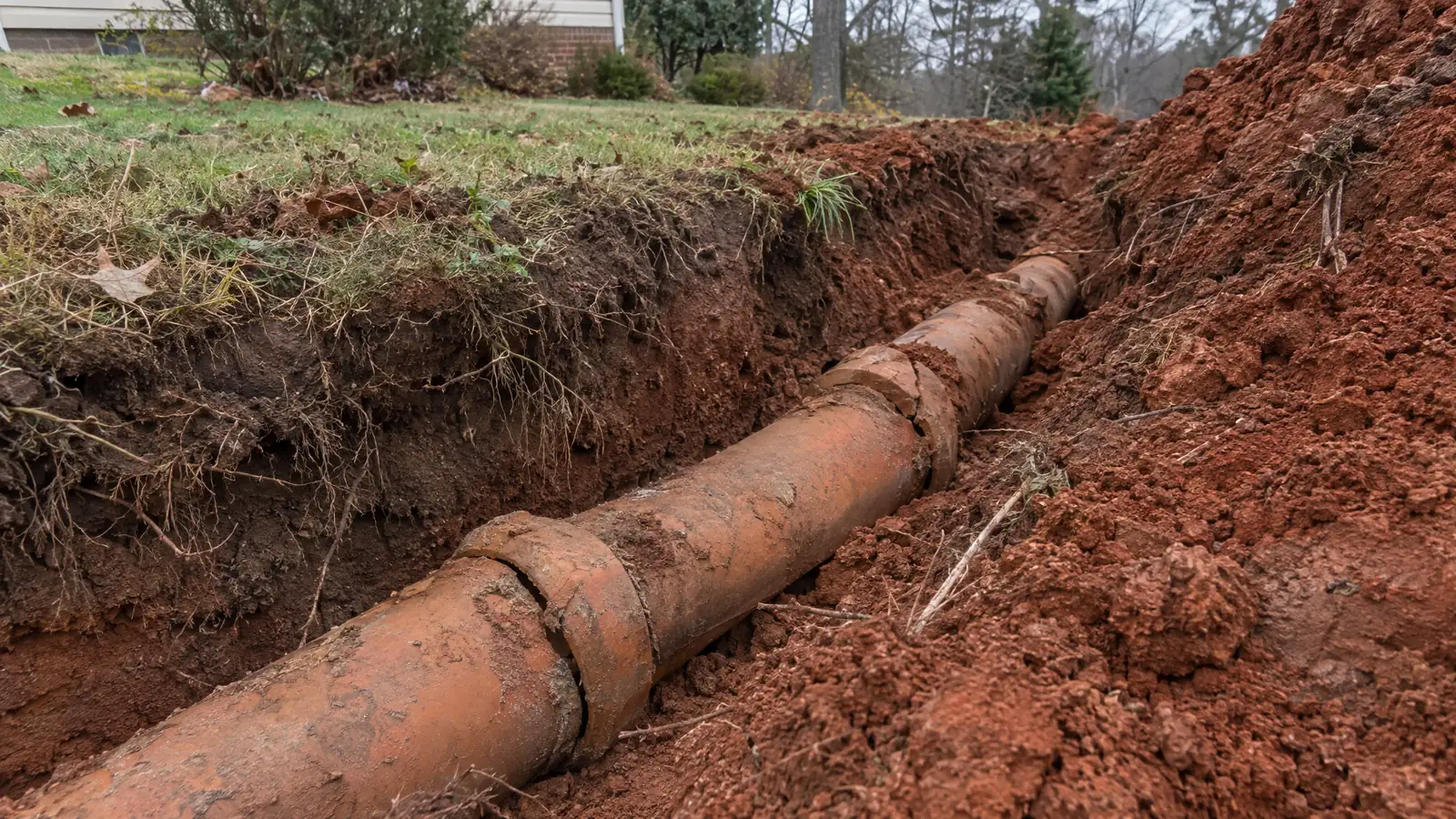
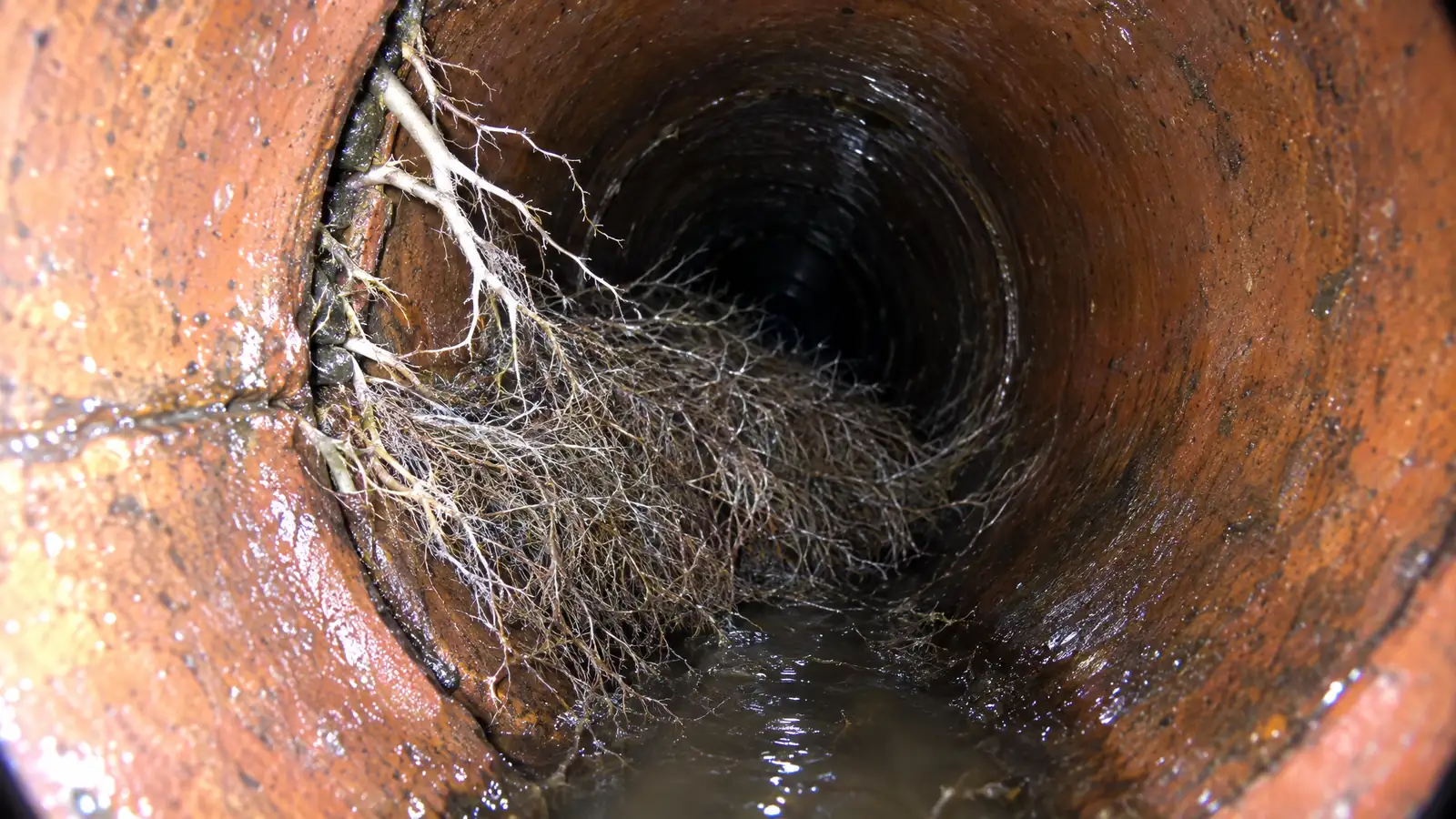
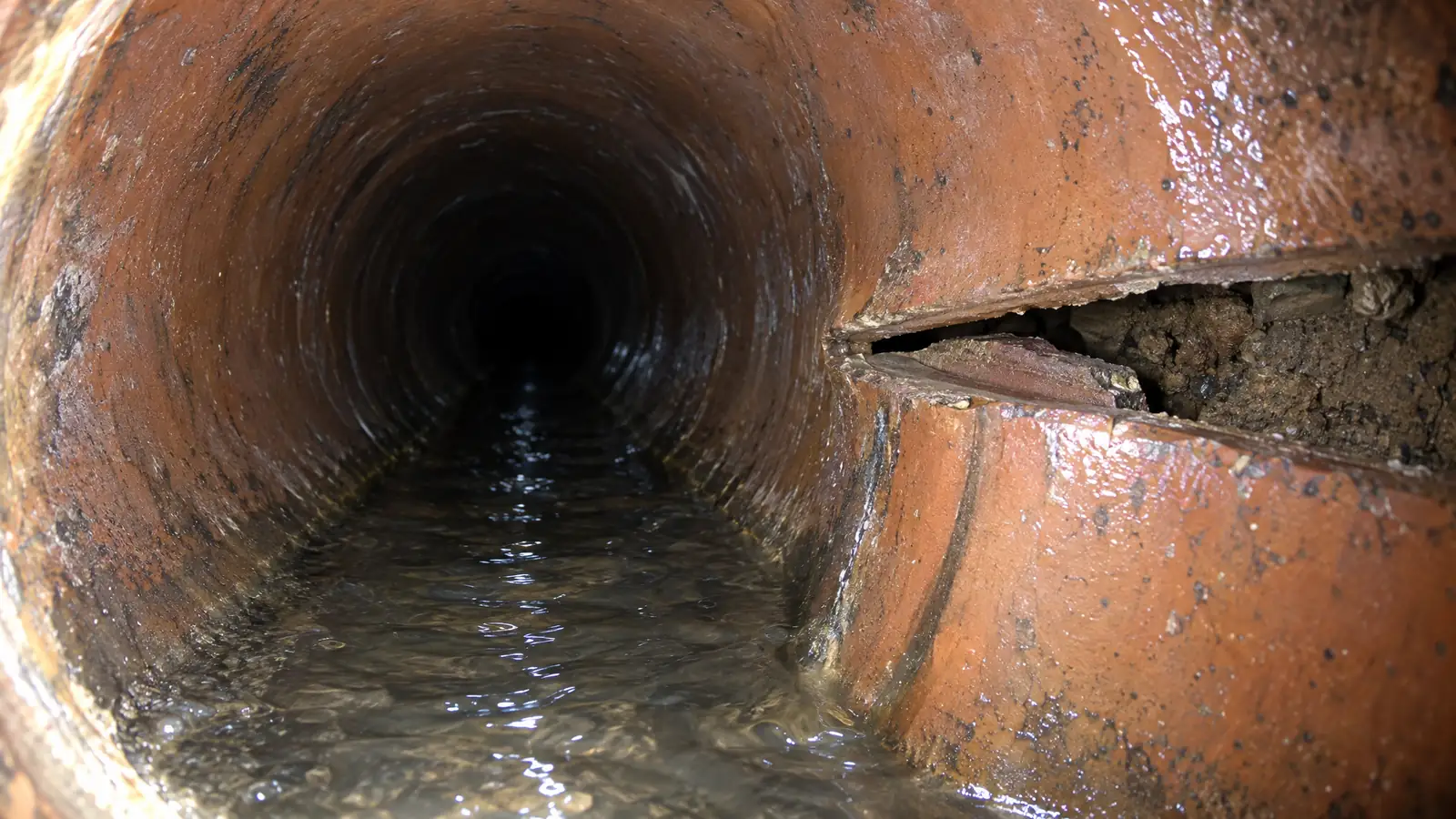
Orange and brown scale, rough texture, and a bore narrower than it should be. Severe cases show flaking, pitting and, at the worst, holes through the wall with soil visible beyond.
The camera also shows whether joints are leaking or loose.
Options
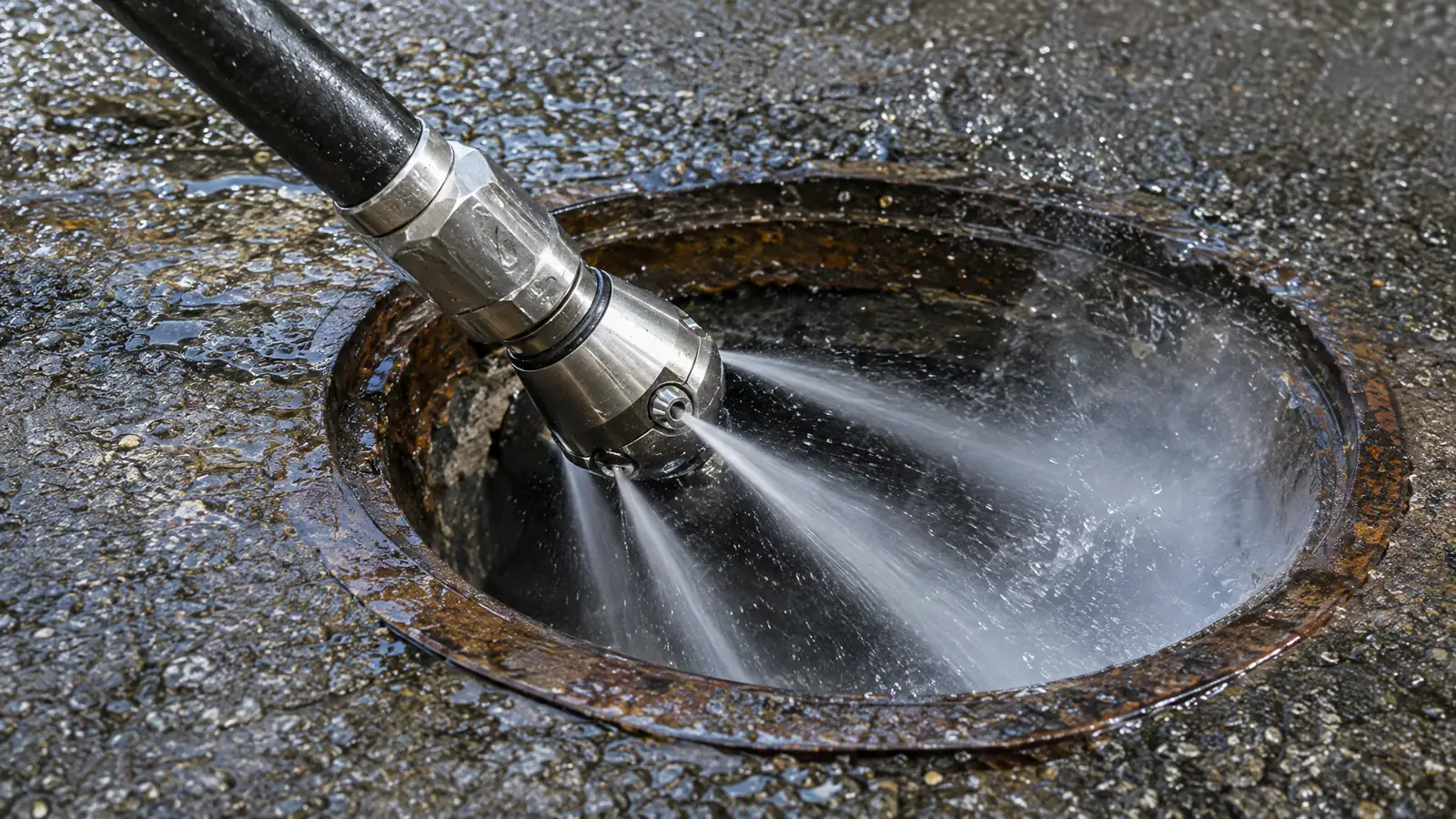
Light and medium scale can often be cleaned off by descaling or hydro-jetting, which restores much of the flow. Moderately worn pipe can be lined. Severely thinned or broken pipe usually needs replacement.
The remaining wall thickness is the deciding factor, and the camera helps estimate it.
Under the slab
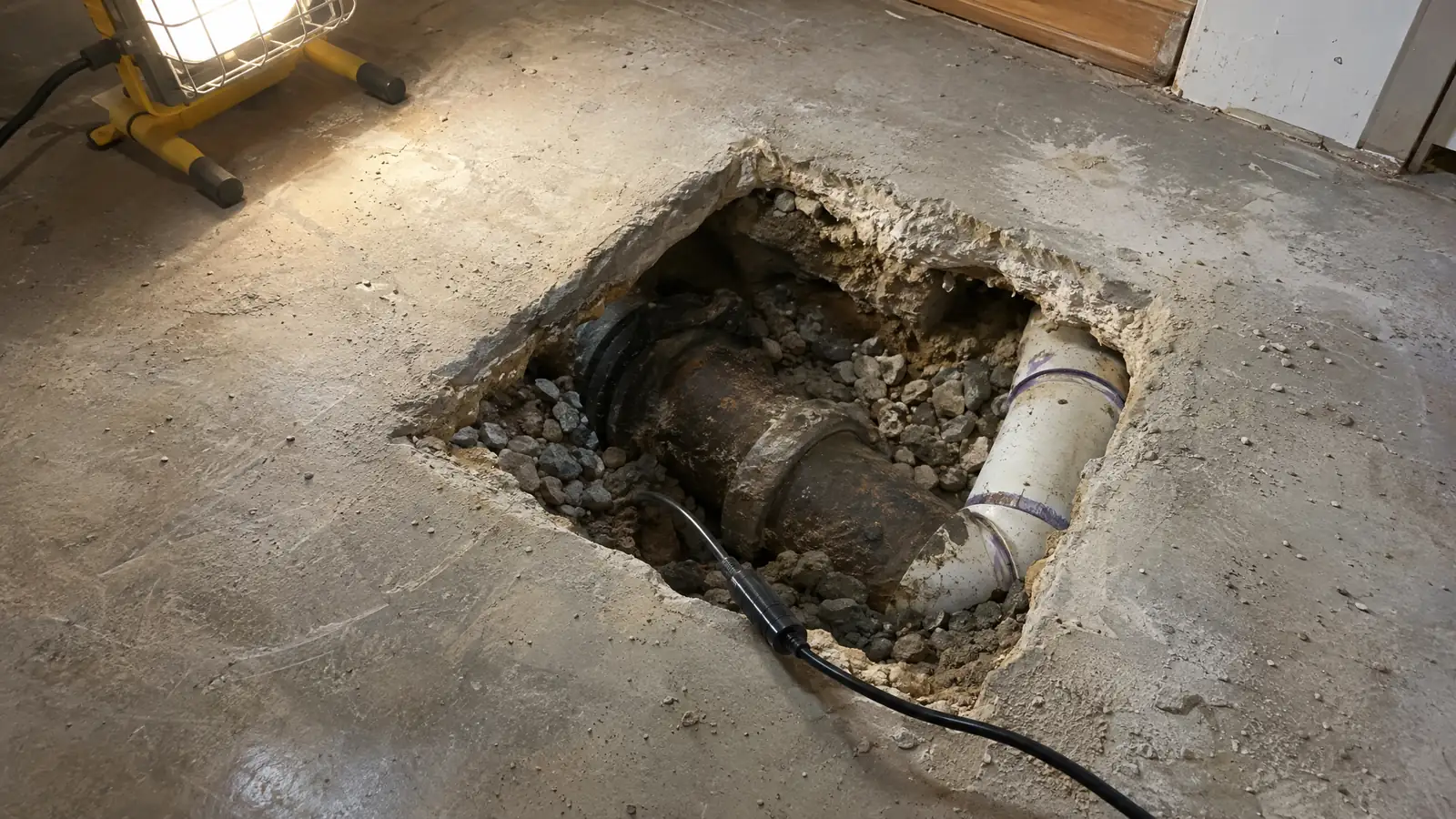
Cast iron drains under a slab are the hardest to access, and their failure is expensive. That is why a camera look is useful before you buy a slab house of the right age.
Not every cast iron line is failing. Many work for decades after a good cleaning.
Quick answers
How long does cast iron last?
Commonly cited ranges run for many decades, but conditions vary widely. A camera tells you about your pipe.
Is rust in the cleanout a bad sign?
Some rust is normal. A thick crust or rust flakes in the water are signs to scope.
Want a professional look at your own pipe?
Schedule a camera inspection with the form below, or call (615) 952-0844.