
Key takeaways
- Sewer laterals, drain lines under slabs and storm lines are hidden
- A home inspector checks what is visible and accessible
- Underground failures can cost more than most visible repairs
- A camera closes the gap
The scope of a home inspection
A general home inspection is a visual survey of accessible systems. Inspectors run water, flush toilets and look for signs of trouble. They do not dig, open walls or put cameras in buried pipes.
That limit is normal and well understood. It simply leaves some risks unchecked.
What is underground
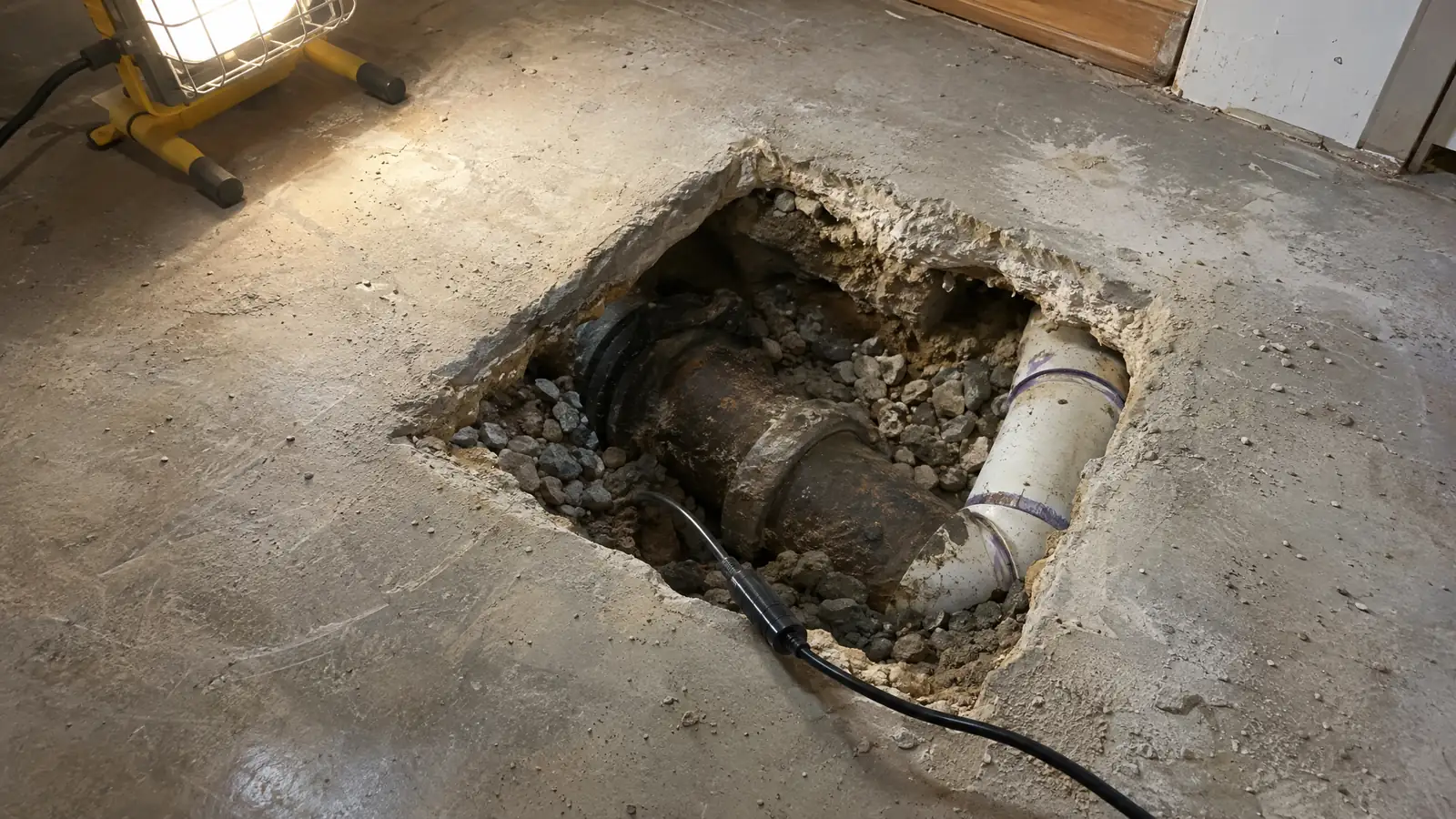
Sewer laterals running from the house to the street, drain lines in and under the slab, storm drains, buried downspout lines and sometimes old, forgotten pipes.
These are made of materials that age differently, and they sit under tree roots and soil that moves.
Signs a home inspector can notice
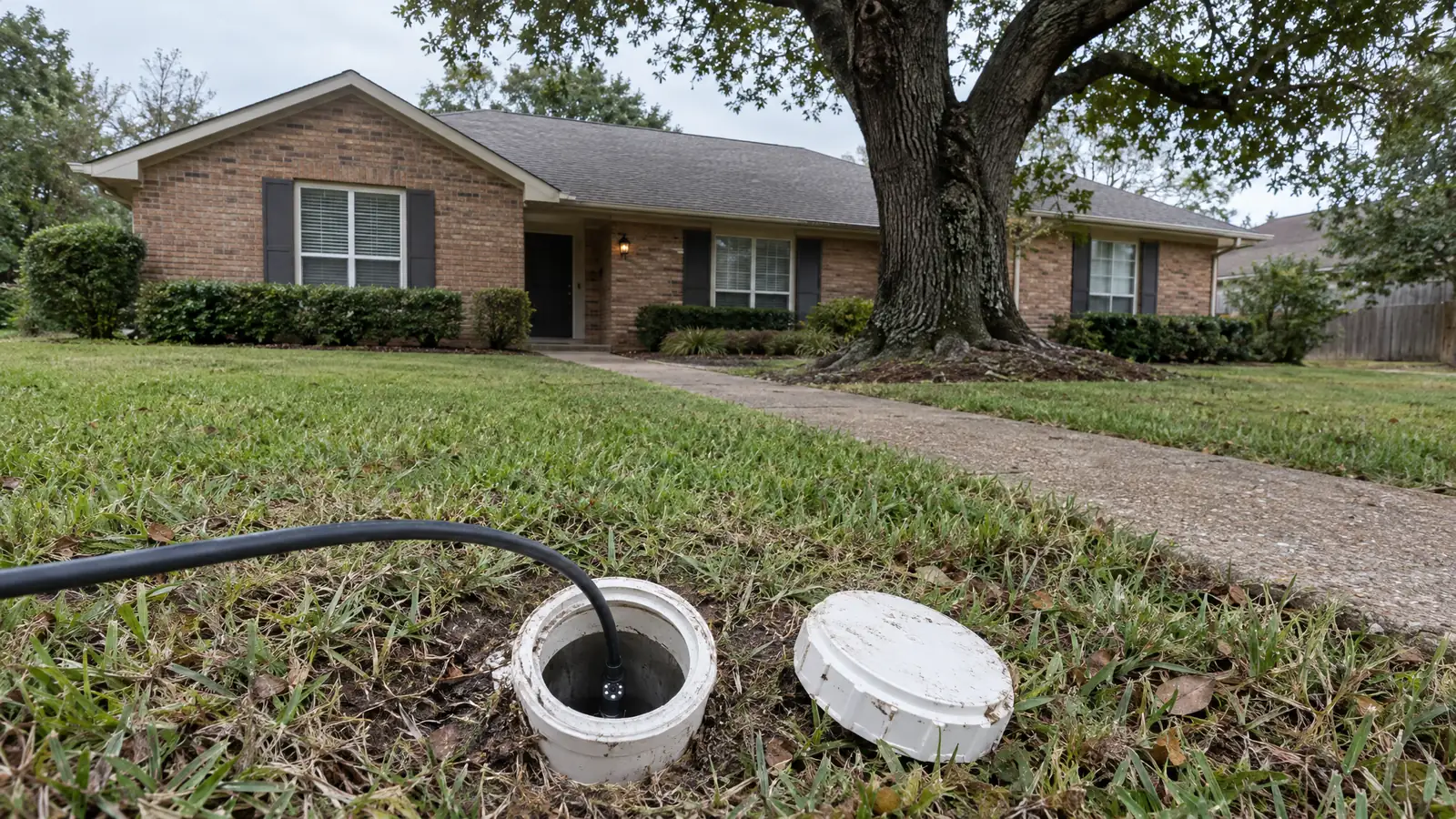
An alert inspector may spot clues: slow drains, a sunken strip in the lawn, a cleanout with heavy debris, roots lifting a walkway or a sewer odor. Good ones recommend a sewer scope when they see them.
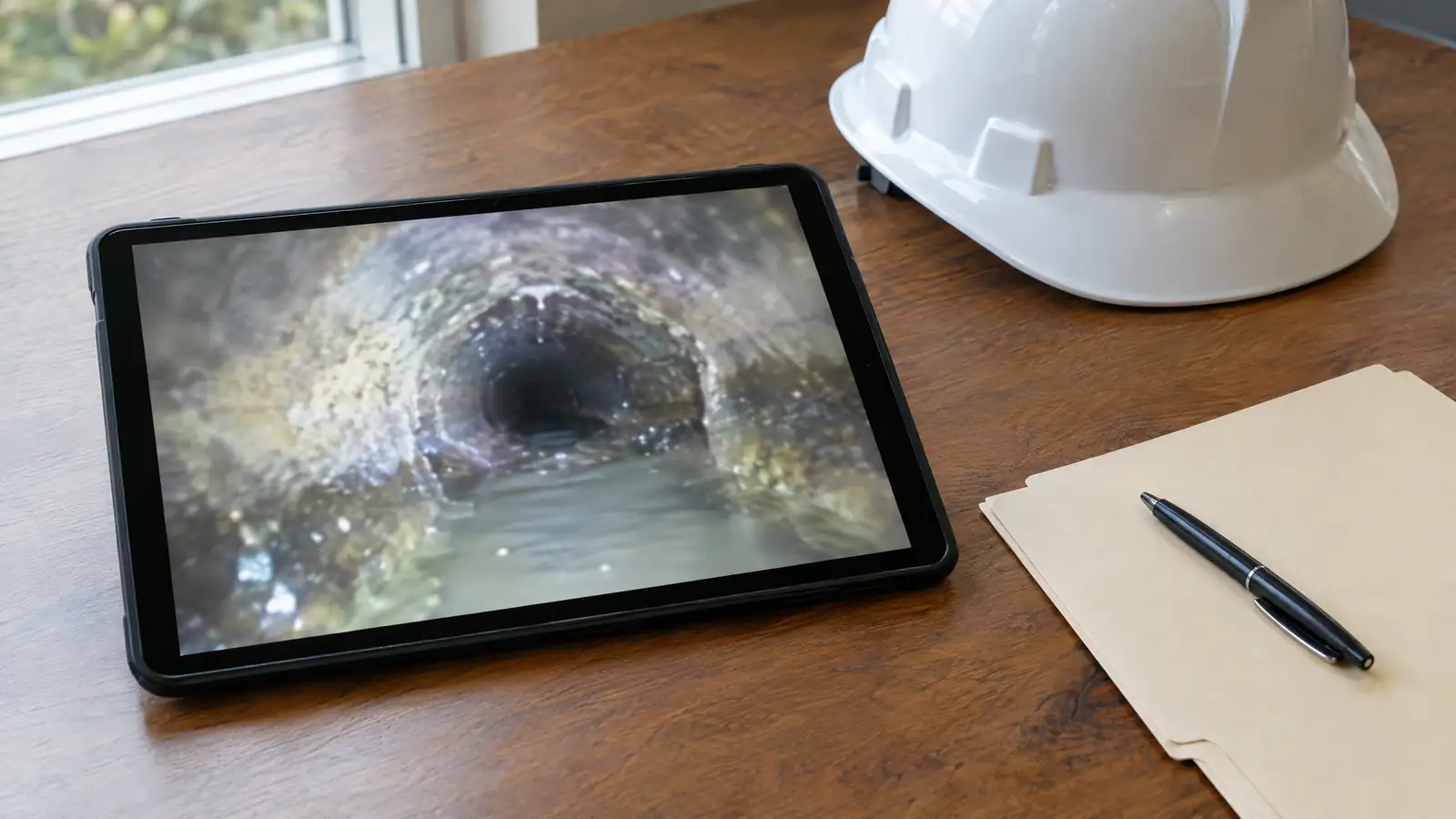
But clues are not diagnosis. Only a camera shows the pipe.
Closing the gap
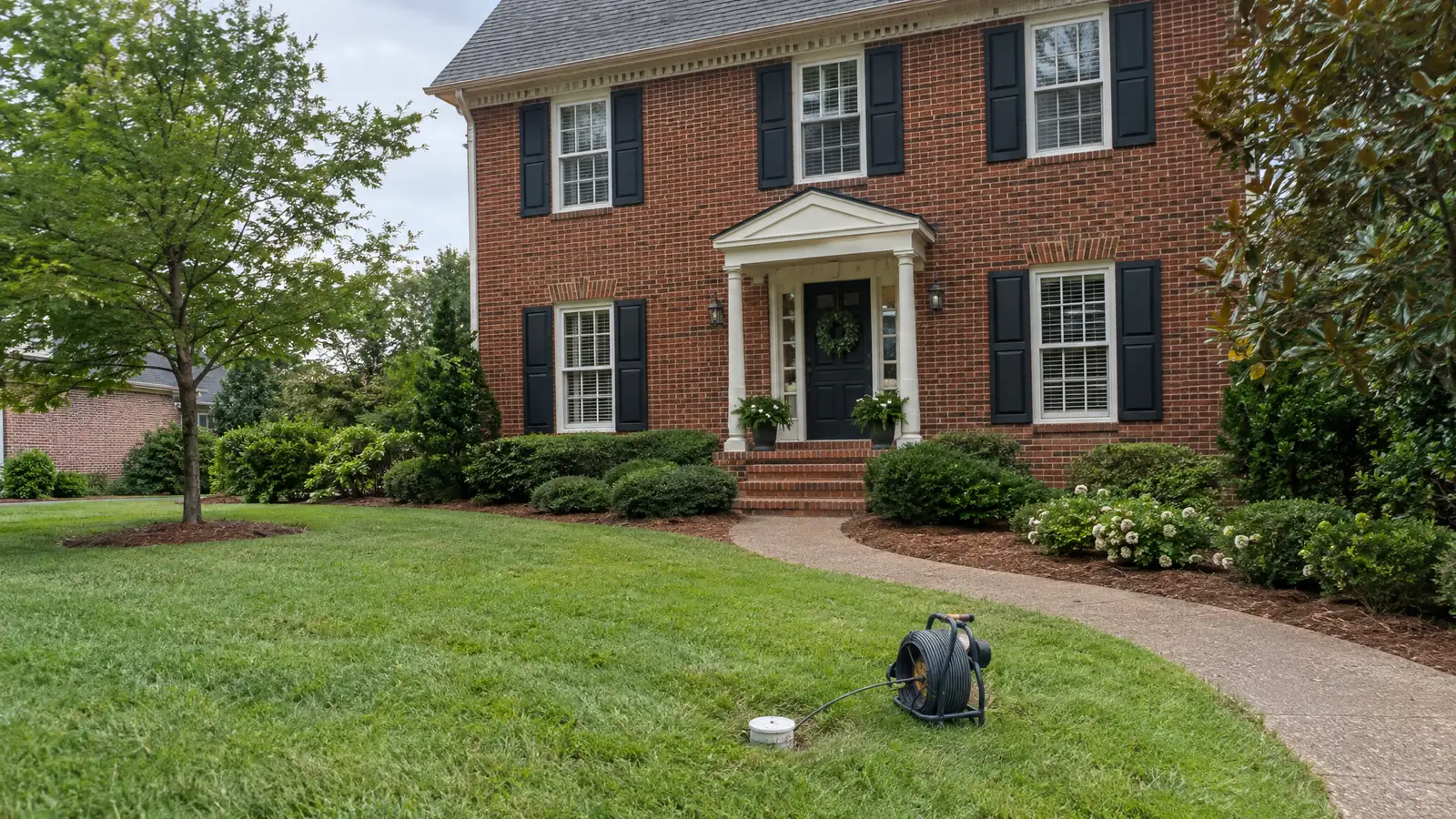
A sewer scope is a specialty inspection that complements the home inspection. It uses a camera and, where needed, a locator, and delivers footage and a report.
Think of it as the underground chapter of the home inspection.
Quick answers
Do home inspectors do sewer scopes?
Some offer them as an add-on. Others refer to specialists.
Is a sewer scope part of a termite inspection?
No, they are separate inspections.
Want a professional look at your own pipe?
Schedule a camera inspection with the form below, or call (615) 952-0844.