Key takeaways
- Installation errors are the main risk in new lines
- Bellies, missing glue and debris show clearly on camera
- Early findings are easy for the builder to fix
- Document before landscaping and before the warranty ends
What goes wrong
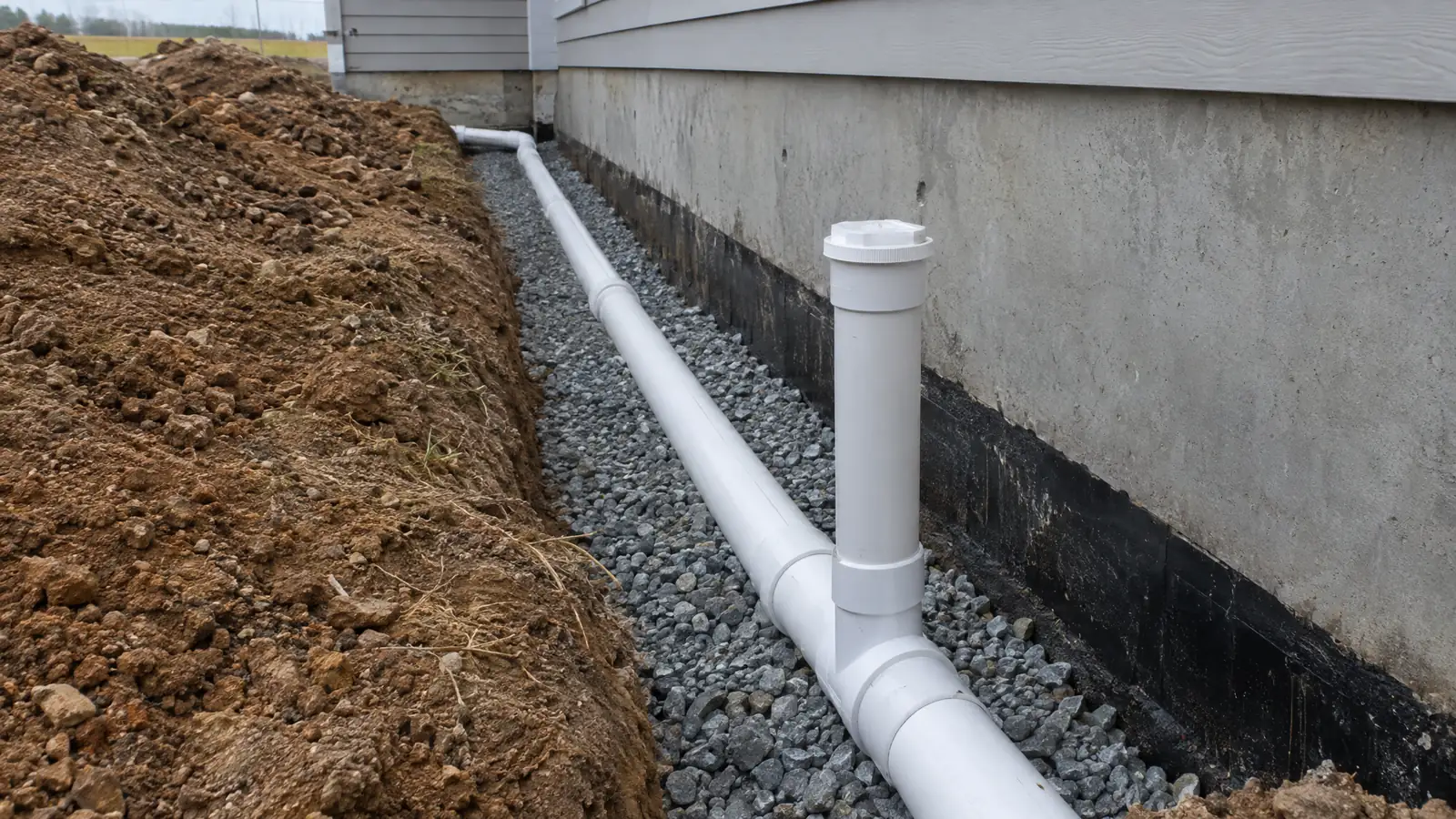
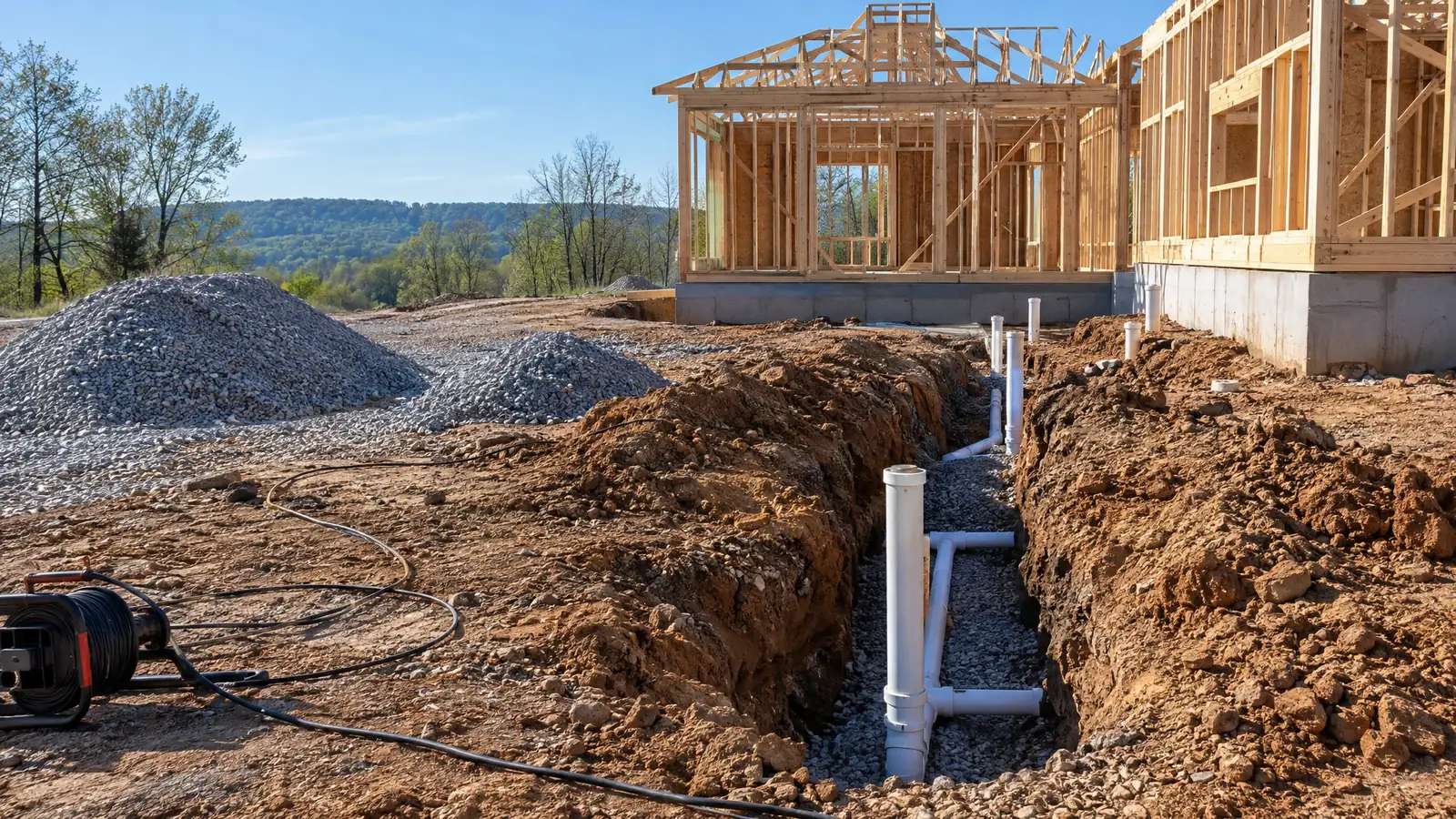
Trenches are bedded quickly, lines are laid around other trades and the pipe is open to debris until the house is connected. Result: bellies from soft bedding, joints missing glue, mortar and rags in the pipe, and lines crushed by equipment.
None of these are rare.
The best times to inspect
Before the slab is poured and the lines are buried is ideal, because a fix is cheap. Before the final inspection and before closing are next. Within the builder’s warranty period is the last good chance.
Ask your builder what the warranty covers and how long it lasts.
What the camera checks
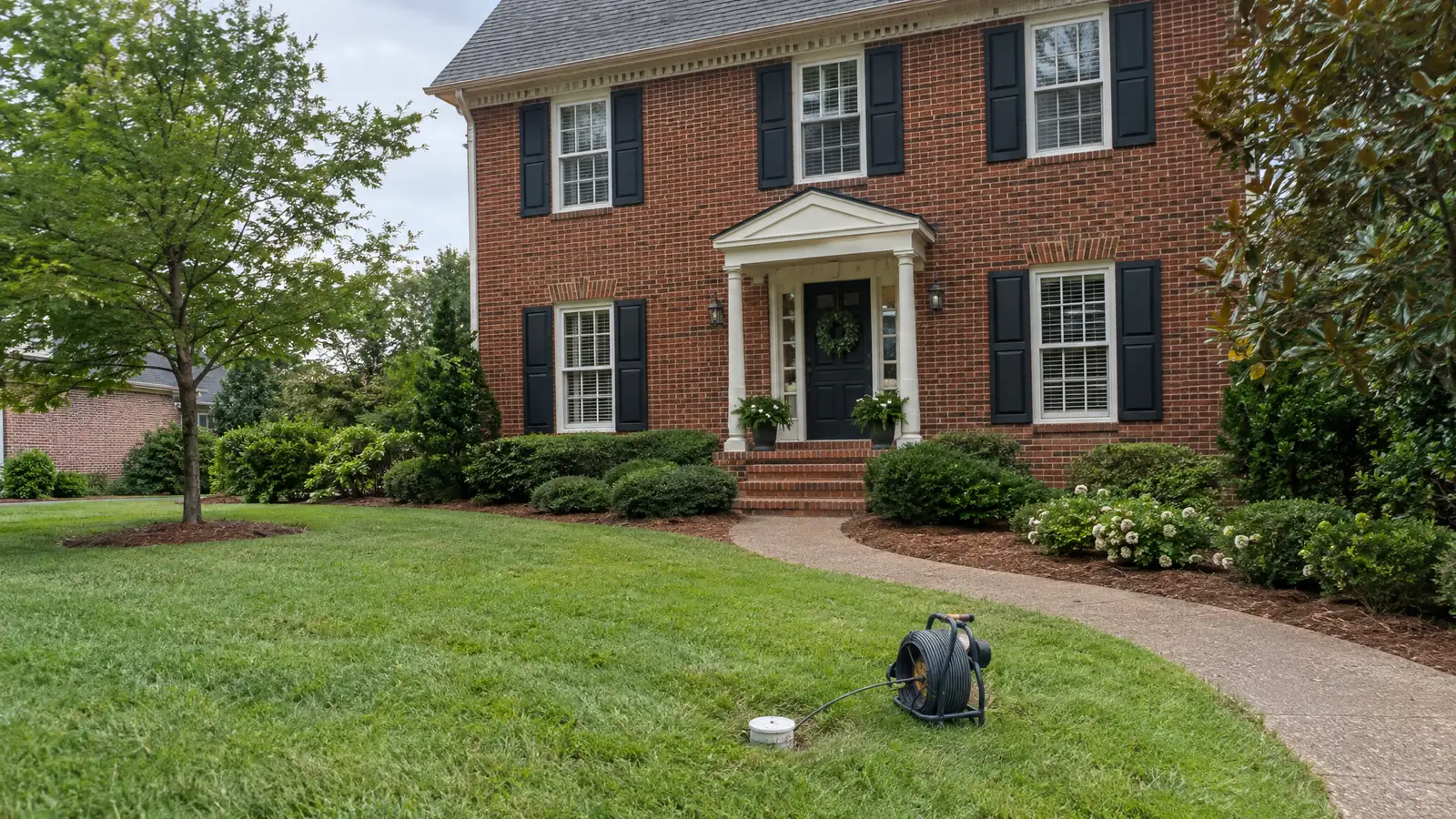
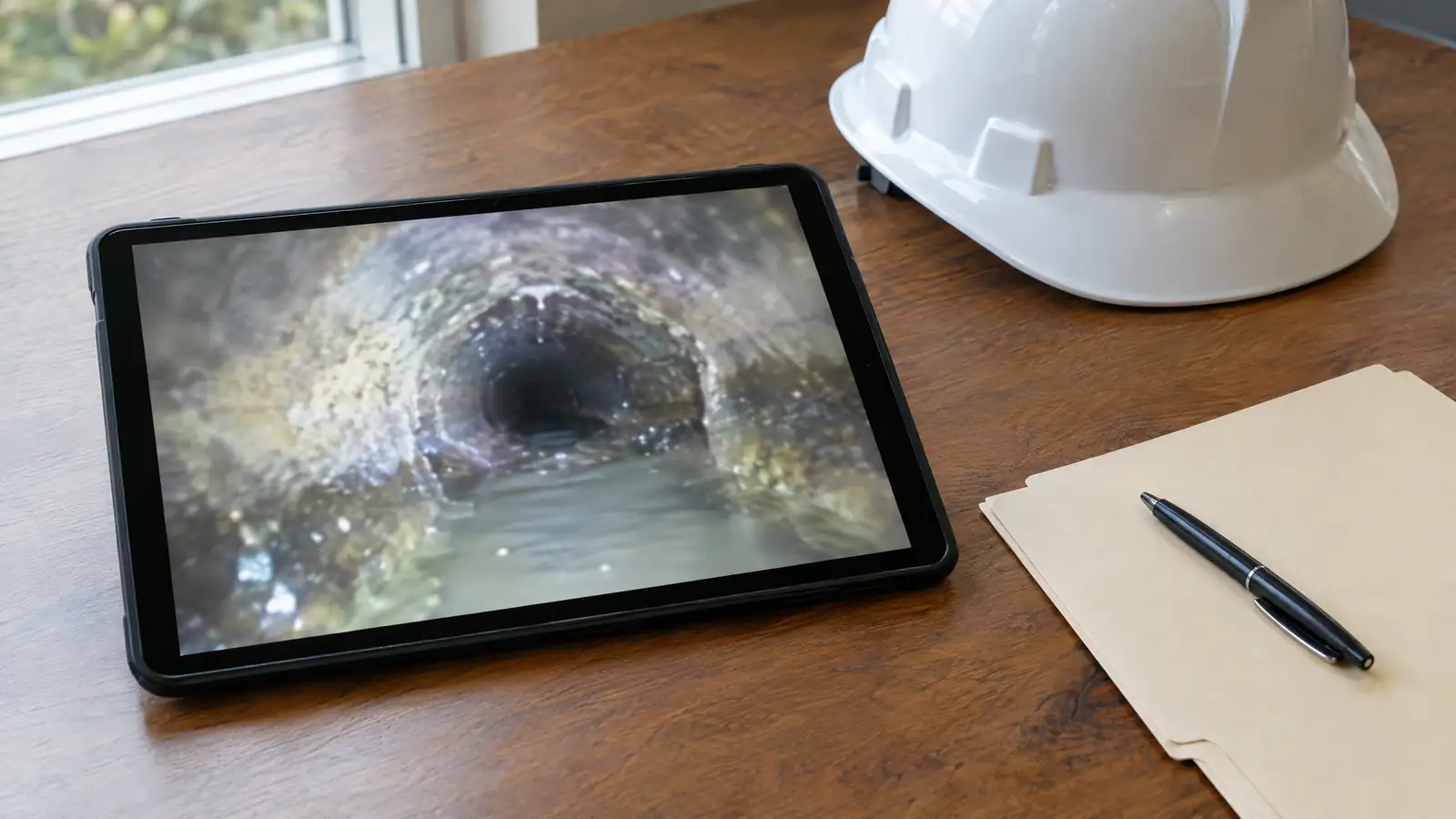
Slope, by watching for standing water. Joints, by looking for gaps or missing cement. Debris, by finding anything that should not be there. Damage, such as dents or crushed sections. And the connection, to see that the line meets the tap or stub-out properly.
A clean scope is a baseline you can keep.
Talking to the builder
A recorded finding is hard to dispute. Present the footage and the summary calmly and ask for a fix. Most builders prefer to correct a problem than to have a dissatisfied buyer.
Keep a copy of everything.
Quick answers
Are new-build sewer problems common?
They are more common than people expect, which is why scoping a new build is worthwhile.
Does a municipal inspection check this?
Municipal inspections check certain things at certain stages. They are not a substitute for a camera look at the finished line.
Want a professional look at your own pipe?
Schedule a camera inspection with the form below, or call (615) 952-0844.