Key takeaways
- Kitchen lines carry far more grease than a home’s
- Buildup shrinks the pipe and fails without warning
- Scheduled scopes find weak spots on your terms
- Footage doubles as a maintenance record
Why kitchens clog
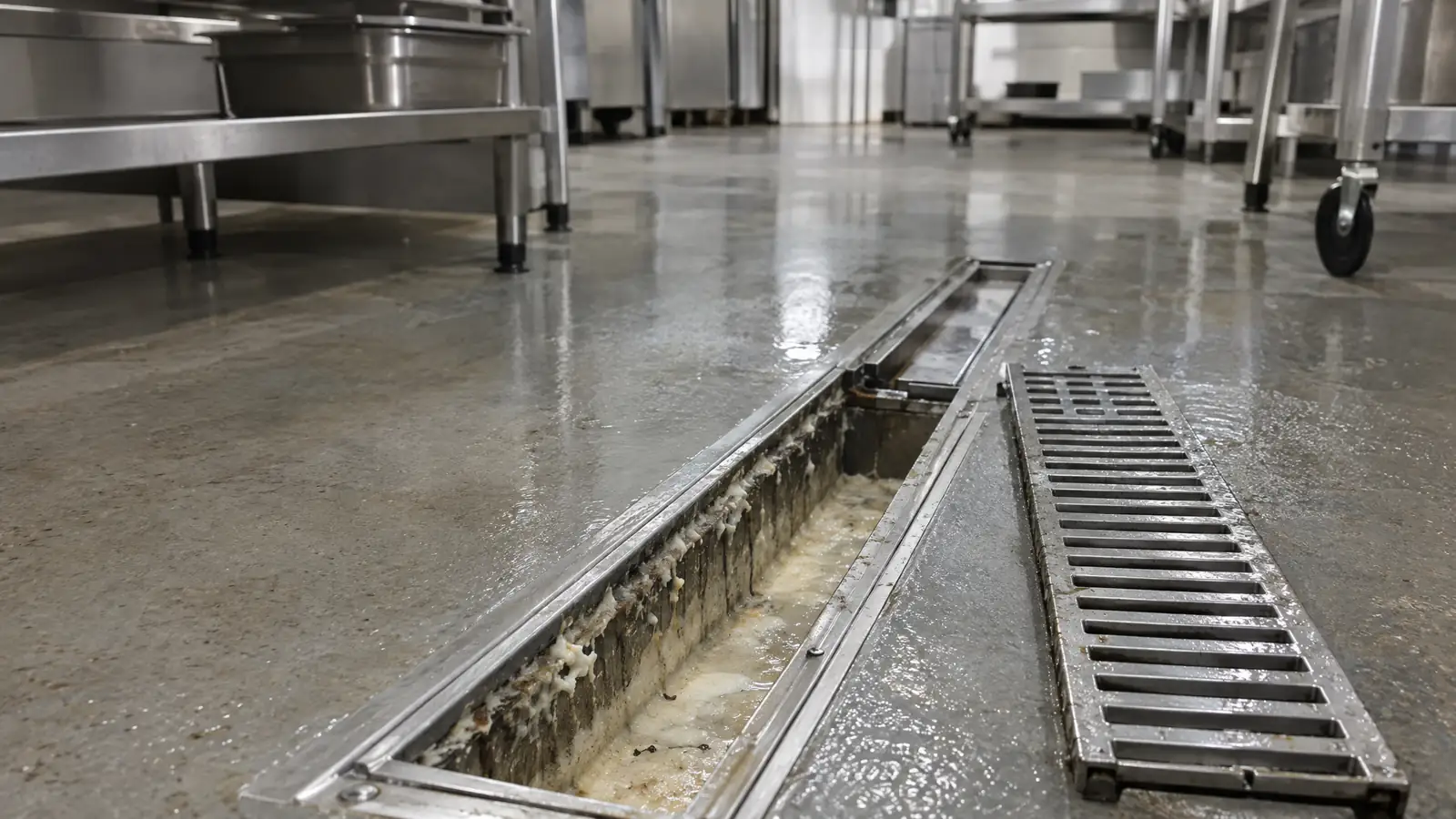
Cooking fats and oils go down the drain warm, then cool and stick to the pipe walls. Layers of fat, food, soap and scale build until only a thin channel is left.
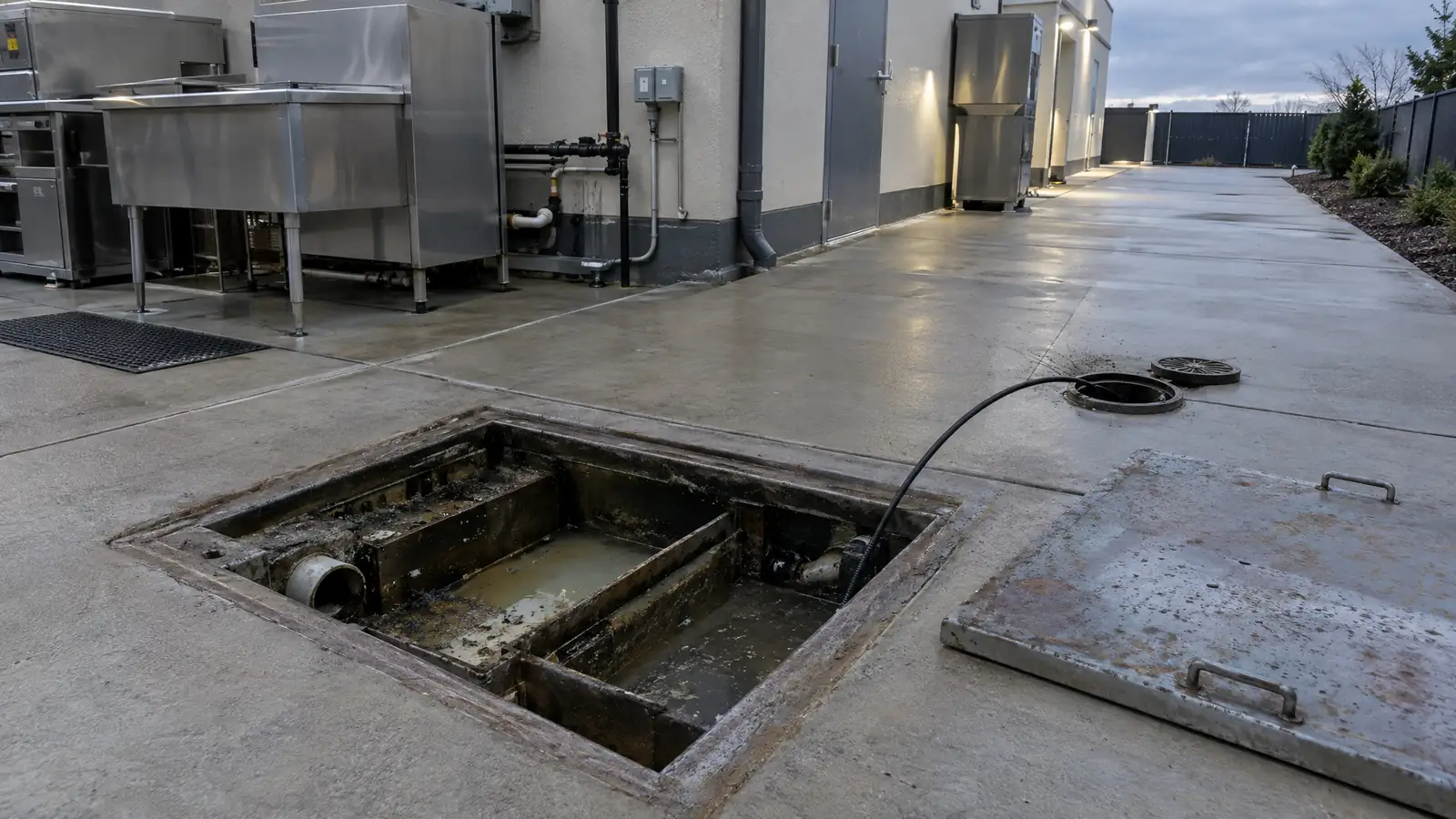
Traps and interceptors catch some, but lines downstream still collect it.
The cost of a shutdown
A backed-up kitchen can close for the day. The lost service, the cleanup and possibly health authority attention all cost far more than preventive maintenance.
The cheapest time to find a bad line is on a quiet morning.
What to inspect
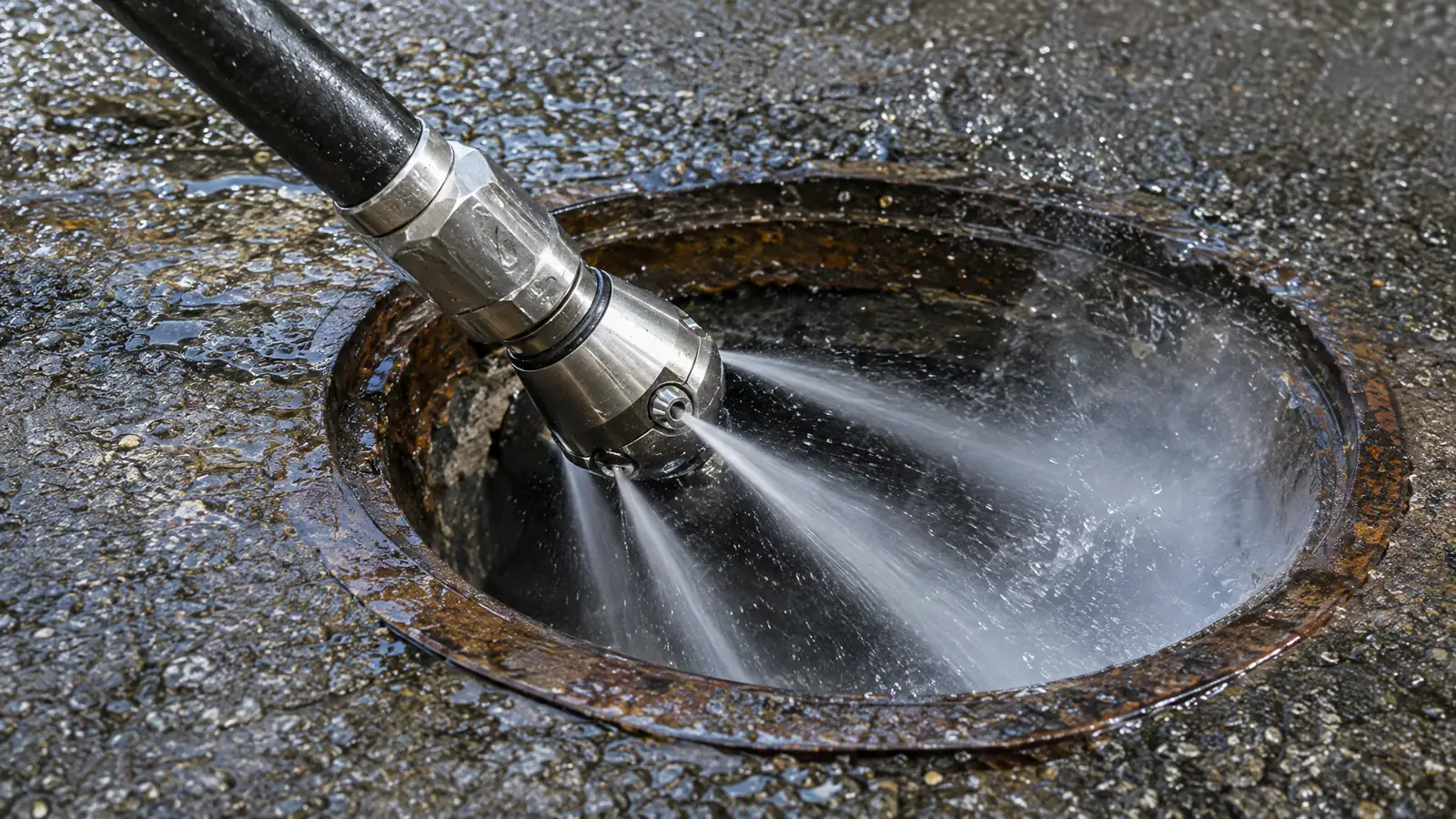
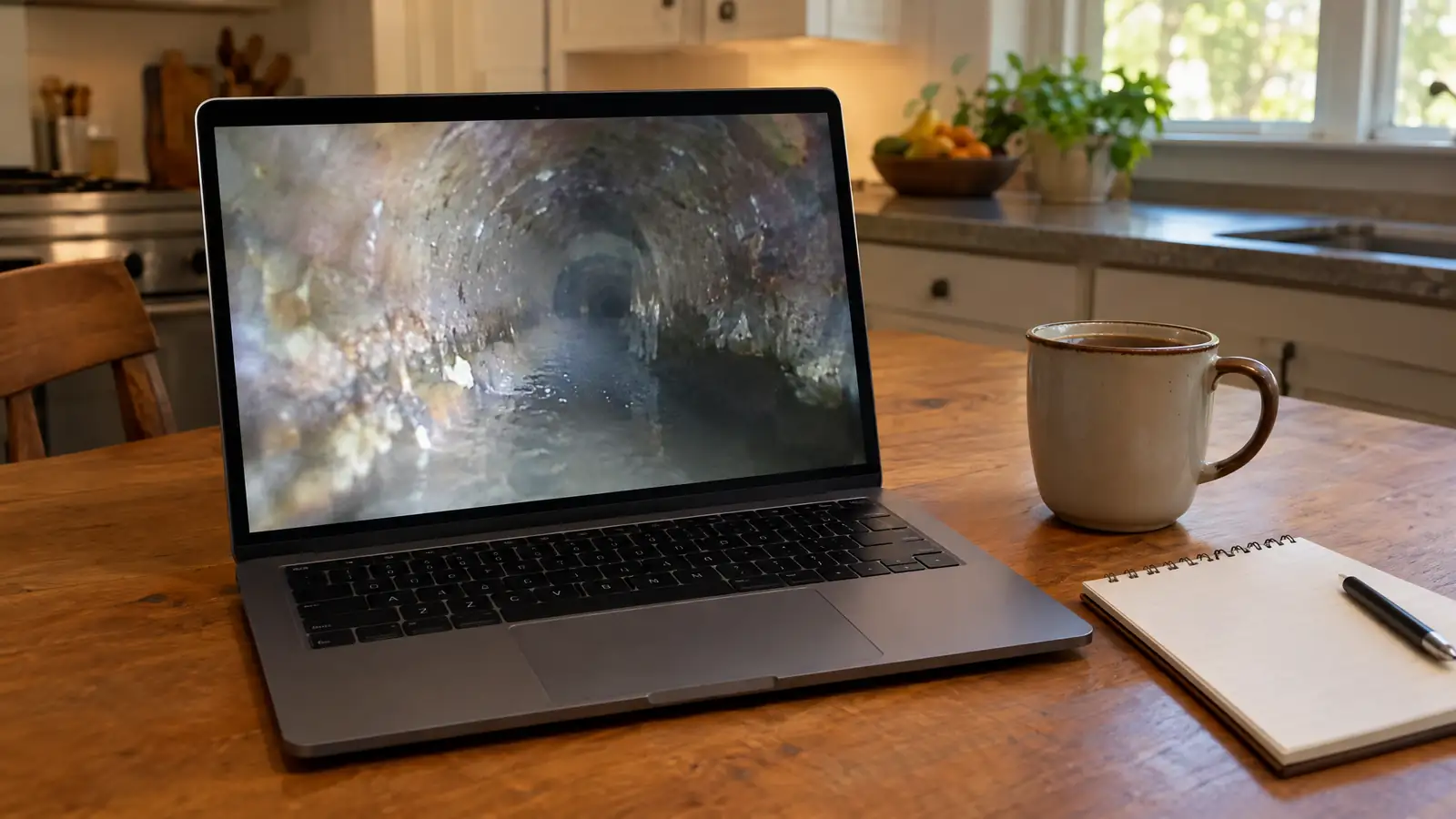
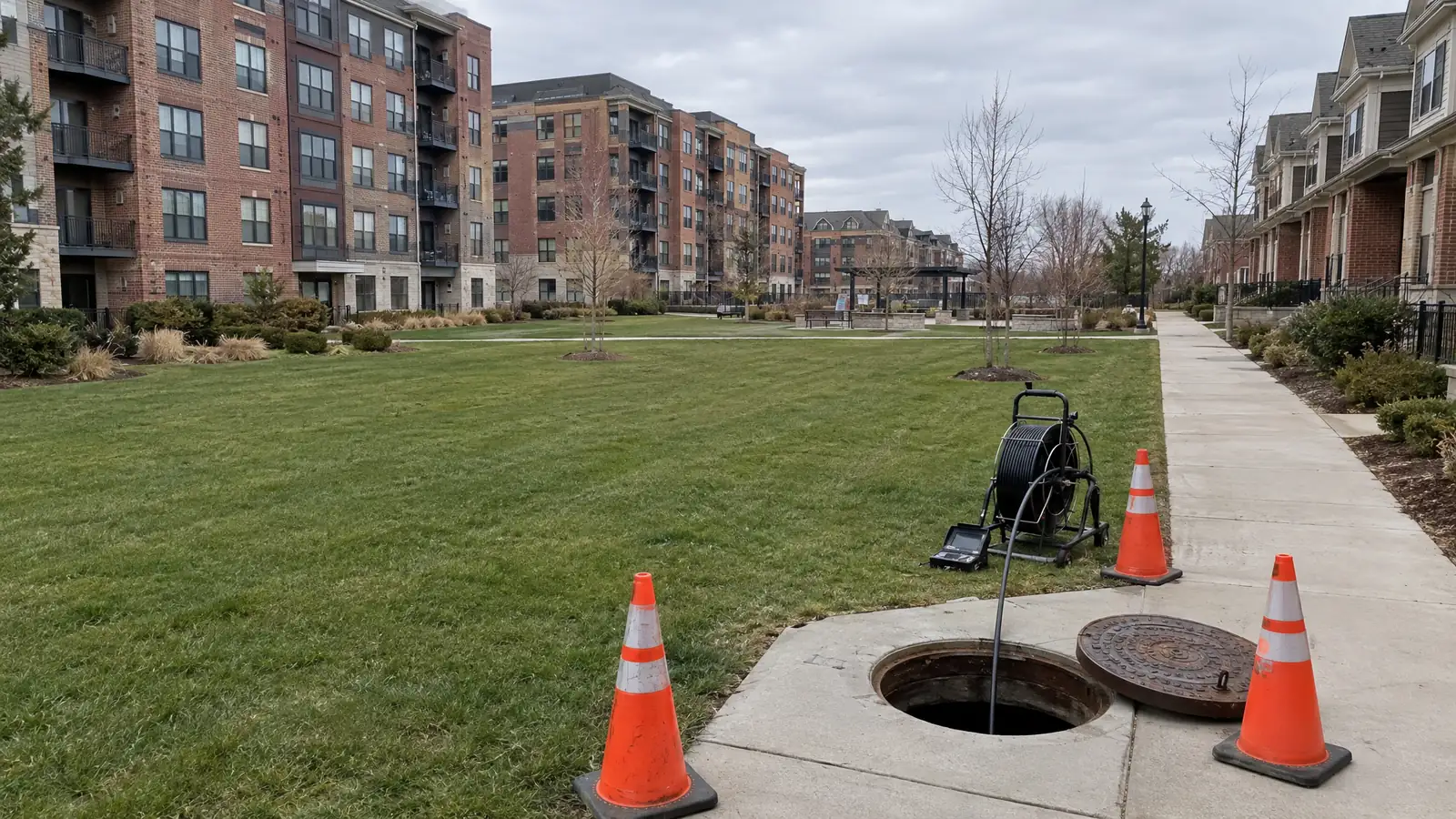
Floor and trough drains, grease trap outlets, the kitchen branch and the building main. The camera shows buildup thickness, cracks and sags, and helps plan jetting where it is needed.
Record before and after cleaning to document the result.
How often
Busy kitchens benefit from a scope once or twice a year. Lower-volume operations can scope annually. Any change in drain behavior is a reason to scope sooner.
Check local grease control rules, which vary by city.
Quick answers
Can I do this during business hours?
It is better outside service hours. Plan an early morning or after close.
Does the footage help with inspections by authorities?
It documents the line condition, which can be a useful supporting record.
Want a professional look at your own pipe?
Schedule a camera inspection with the form below, or call (615) 952-0844.