Key takeaways
- Heavy grease, roots or debris can hide defects
- Jetting cleans the pipe wall so the camera can see it
- Look first to check the pipe can take jetting
- A before and after view shows what changed
Why clean first
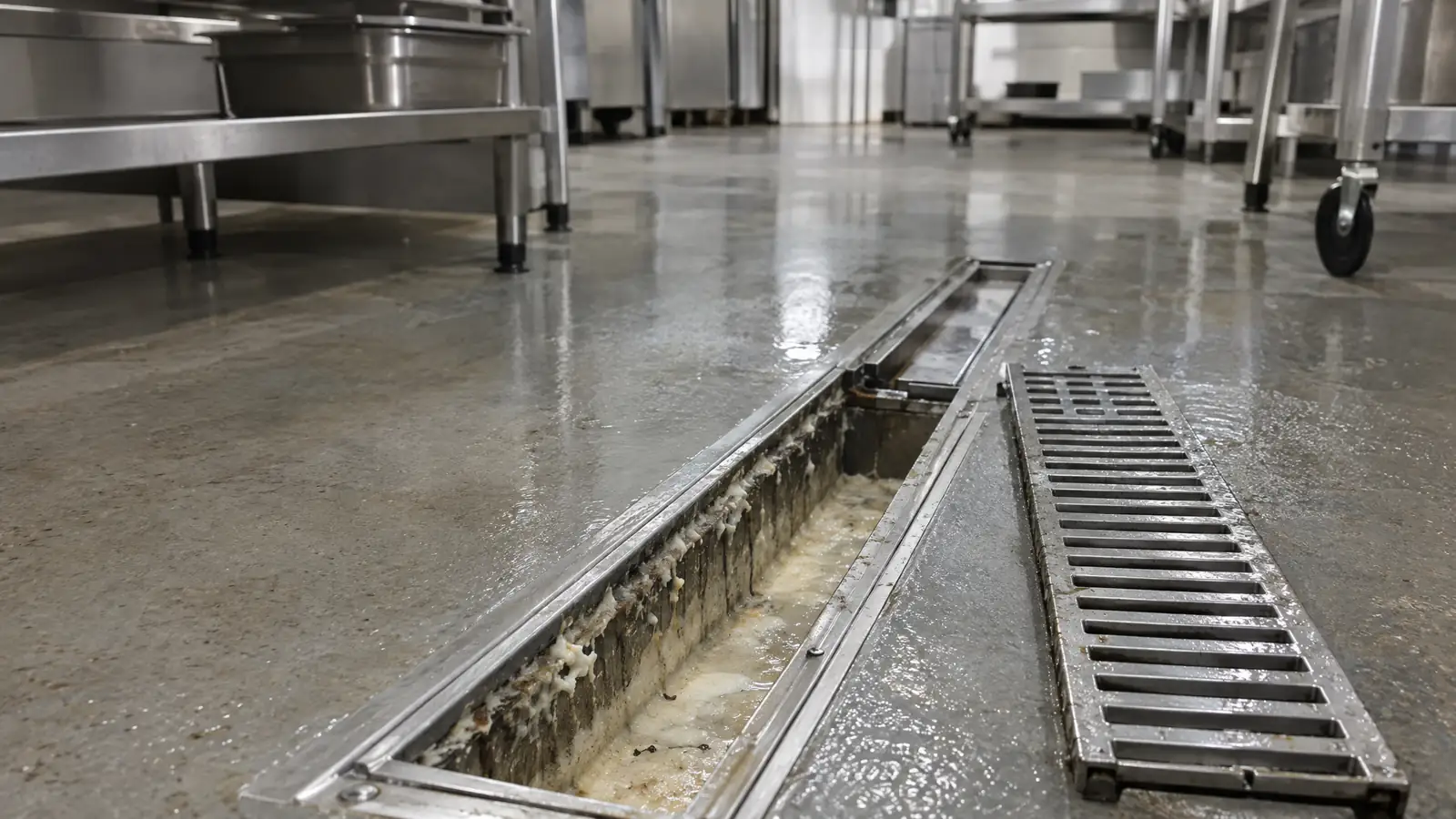
If the pipe is coated in grease or packed with roots and silt, the camera sees the coating, not the pipe. Defects hide underneath. A cleaned pipe gives a true picture of its condition.
Sometimes the camera cannot pass at all until the line is cleared.
Look before you jet
Hydro-jetting is safe in sound pipe but can harm cracked, collapsed or fragile pipe. A quick camera look first tells you whether the pipe can take the pressure.
That is why we pair the two.
How it works
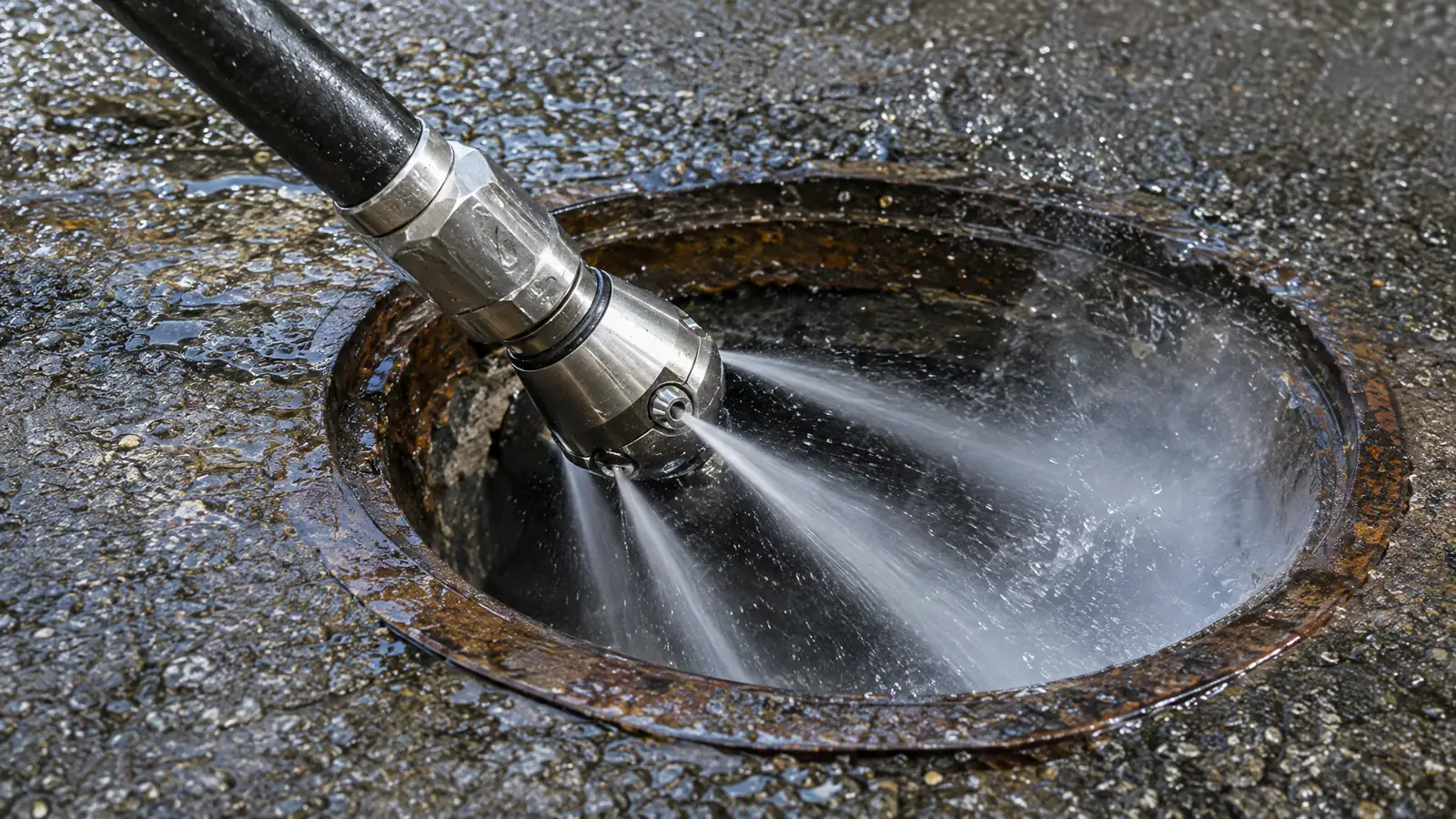
A hose with a nozzle sends high-pressure water backward and forward as it advances, scouring the walls and flushing debris down the line. Different nozzles handle grease, scale or roots.
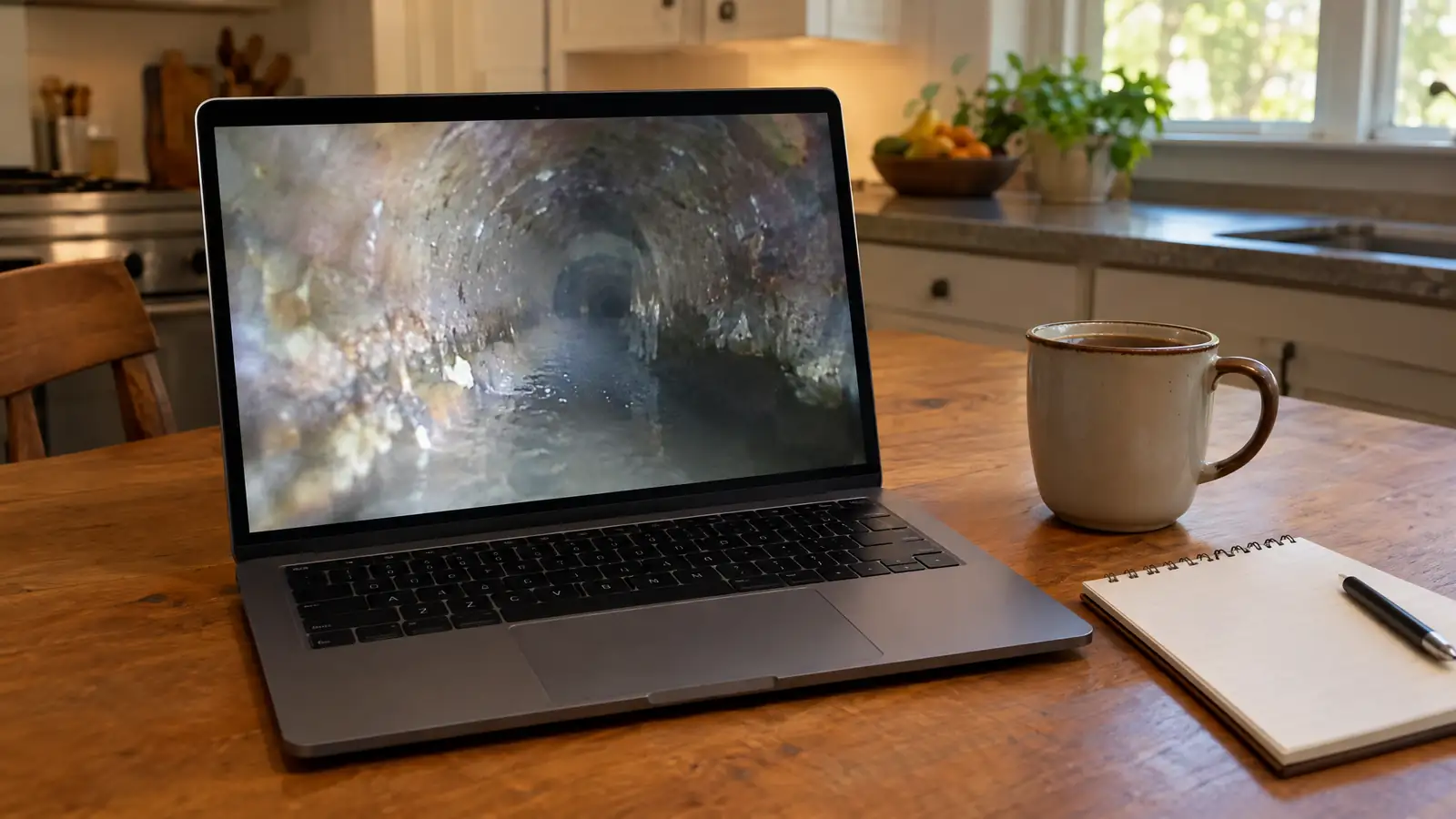
The camera follows to record the result.
What the second pass shows
After jetting, the camera reveals cracks, offsets, bellies and old repairs that were hidden. The cleaned line can be honestly evaluated.
Jetting does not fix structural damage. It shows it.
Quick answers
Will jetting fix my problem?
It fixes buildup. If the pipe itself is damaged, jetting only clears it temporarily.
Is jetting messy?
It is controlled and contained, flushing debris downstream. Tell us if there is a nearby sensitive area.
Want a professional look at your own pipe?
Schedule a camera inspection with the form below, or call (615) 952-0844.